
Spiritual Significance
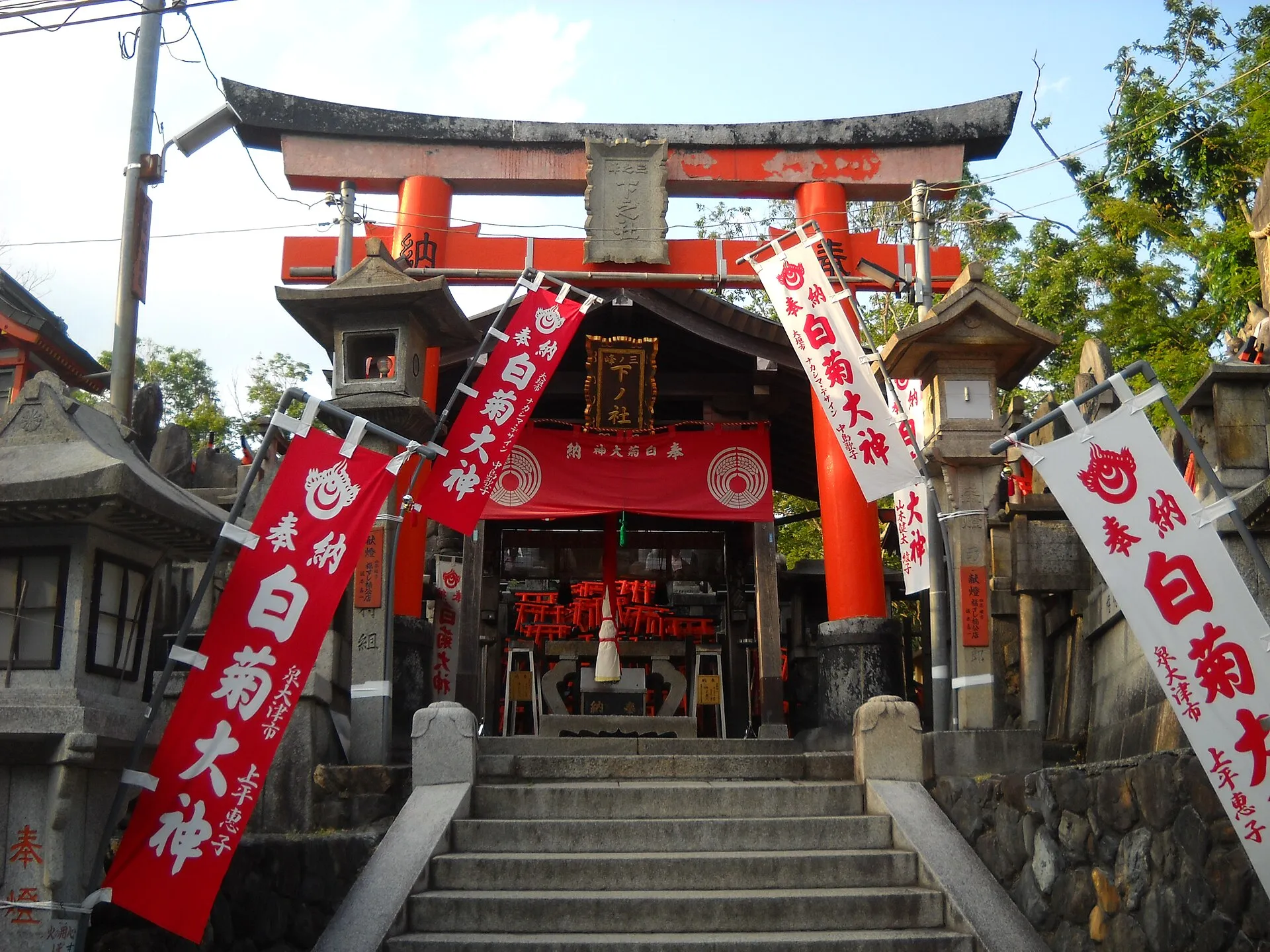
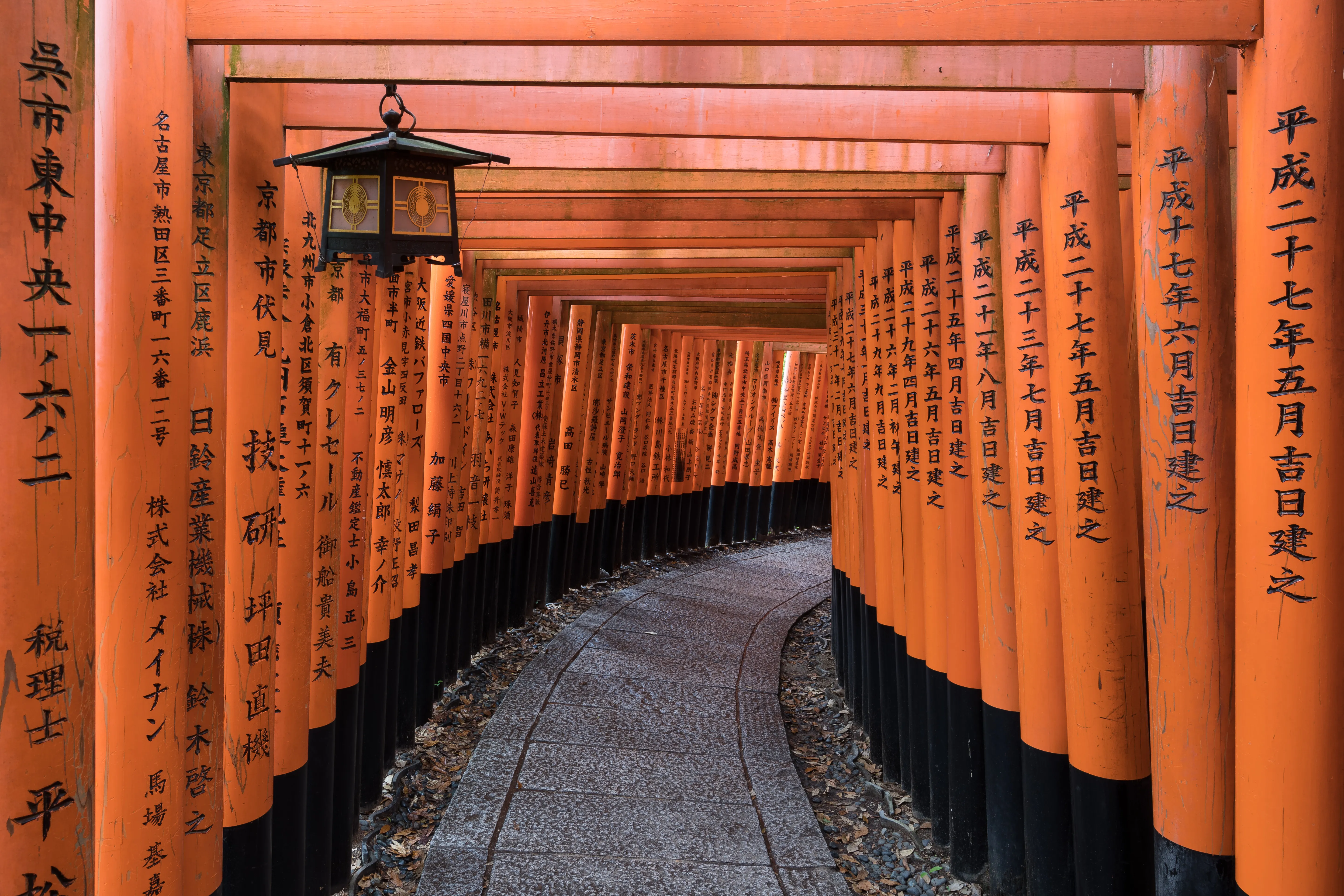
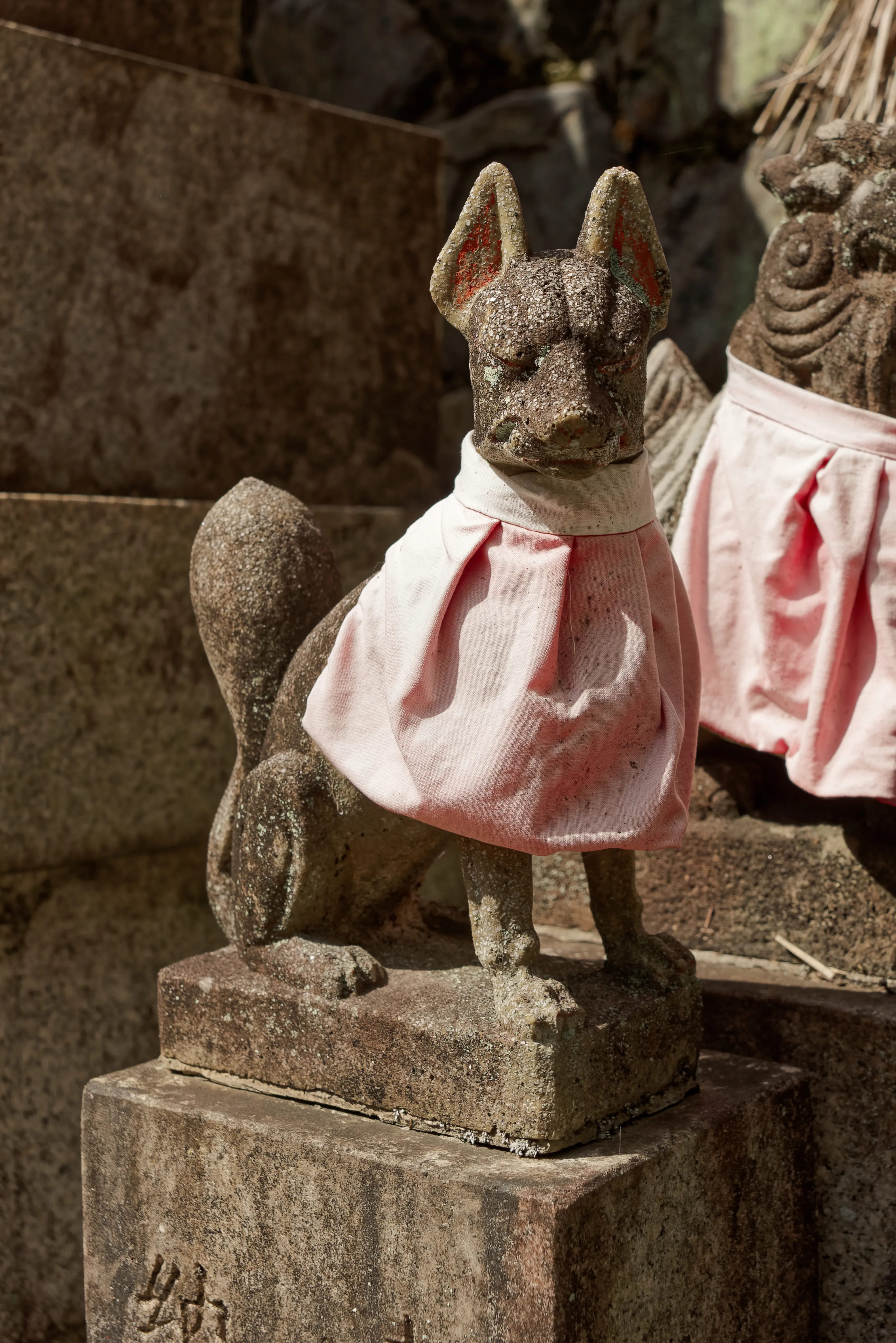
The Senbon Torii — literally "thousand torii" — splits into two dense parallel tunnels just behind the main hall, the shrine's most photographed and most sacred passage. Each gate is an offering to Inari; the kitsune foxes standing guard hold a key to the rice granary, a jewel, a scroll, or a sheaf of grain, a symbolic vocabulary repeated across the dozens of sub-shrines that line the 4 km trail to the 233 m summit of Mount Inari. Founded by the Hata clan in 711 CE, Fushimi Inari is the head of roughly 30,000 Inari shrines nationwide and remains a working place of worship: the Hatsu-uma rite each February and the lantern-lit Motomiya festival in July draw devotees rather than sightseers. From the summit the forest opens to Kyoto spread below — see japan-guide's overview for the shrine's full history.
Visitor Etiquette
Early morning visits are essential: dawn avoids crowds and creates a magical atmosphere. The full hike takes 2-3 hours, but you do not need to reach the top — turn back anytime. Wear good shoes, as steep stone steps can be slippery when wet. Bring water, as vending machines become scarce beyond the halfway point. Stay right on narrow gate tunnels to let faster hikers pass on the left. At prayer spots, follow the nihai-ichireihai ritual: bow twice, clap twice, bow once. Dress modestly when approaching the main shrine buildings.
Fushimi Inari Shrine timeline
-
Shrine tradition begins
The immigrant Hata clan established Inari worship on Mount Inari in the early Nara period.
-
Main shrine rebuilt
The honden was rebuilt after earlier conflict and remains central to the shrine visit.
-
Romon gate donated
Warlord Toyotomi Hideyoshi dedicated the towering vermillion entrance gate that greets visitors today.
- 20th century
Torii route expands
Donated gates multiplied into the mountain path that defines the visitor experience.
Fushimi Inari Shrine in Pictures
When to Visit
The mountain and its torii paths stay open 24 hours, every day of the year, and the lower gates are lit after dark. For the iconic empty-tunnel photographs, arrive at dawn (6-7 AM) or after 5 PM — the lower Senbon Torii is shoulder-to-shoulder between 10 AM and 3 PM, especially on weekends and public holidays. Reaching the Yotsutsuji viewpoint takes 30-45 minutes; the full loop to the summit and back runs 2-3 hours. The shrine office selling amulets and goshuin seals keeps daytime hours of roughly 7 AM-6 PM.
Admission and Costs
Entry to the shrine and the entire mountain trail is free. Optional offerings are modest: a fox-shaped ema prayer tablet is ¥500 (about $3.50) and a goshuin calligraphy seal runs ¥300-500 ($2-3.50). Dedicating a full-size torii gate along the path is another matter entirely — prices start near ¥400,000 (about $2,700) for the smallest and climb past ¥1,000,000 ($6,800) for the largest, which is why the inscriptions double as a directory of sake breweries and trading houses. A group guided visit typically costs ¥4,000-6,000 ($27-40) per person.
The Case for a Guide
Fushimi Inari's torii tunnels are visually overwhelming on arrival — but the system of donations, the fox deity mythology, and the network of sub-shrines halfway up the mountain are entirely opaque to visitors who haven't been briefed before they start walking.
- Which torii were donated by which businesses and why: Each gate has the donor's name and donation date inscribed on the back — guides identify notable donors (major sake breweries, seafood companies, trading houses) and explain the commercial logic behind dedicating gates to the god of rice, harvest, and business prosperity.
- Summit trail vs. crowd management: Guides know the precise point on the trail where 90% of visitors turn back, and can adjust the route to reach the quieter upper sub-shrines where the gate density thins and the forest atmosphere becomes genuinely contemplative.
- Fox deity symbolism decoded: The kitsune fox statues throughout the complex hold specific objects — a key (to the rice granary), a jewel (wish-granting), a scroll (sacred wisdom), a sheaf of rice — that form a coherent symbolic vocabulary guides translate for you as you walk.
- Lesser-known sub-shrines: The Yotsutsuji intersection at the midpoint offers views over southern Kyoto; the Okusha shrine at the upper mountain contains a stone called Omokaru-ishi that predicts your fortunes based on how heavy it feels — guides lead you to both without the wrong turns that cost self-guided hikers 45 minutes.
- Dawn photography timing: Guides who know the shrine advise arriving precisely at first light (around 5:30 AM in summer) for the 20-minute window when the lower gates glow in mist with no other visitors — the shot that appears in every travel magazine and requires precise timing to capture.
Tips for Visitors
The full hike to the summit takes 2-3 hours, so pace yourself and bring water. The first 30 minutes of torii gates are the most crowded — push further up the mountain for quieter photo opportunities. There is no food available on the trail itself, so eat a meal before you start. The mountain paths are unlit, so begin your hike by 4 PM in winter to avoid descending in darkness. Wear sturdy shoes with good grip, as the steep stone steps can be slippery, especially after rain.
Frequently Asked Questions
When is the best season to hike through Fushimi Inari's torii gates?
April and early May bring cherry blossoms that frame the vermillion gates in pink, while October and November set the mountainside ablaze with autumn foliage -- both are peak months that make the two-to-three-hour hike up Mount Inari unforgettable. The shrine is open 24 hours year-round, so dawn visits in any season reward early risers with empty torii tunnels. August is the most challenging month for the climb due to Kyoto's stifling humidity, though the shrine's summer festivals add cultural spectacle.
What are the public visiting hours at Fushimi Inari Shrine?
Fushimi Inari Taisha never closes: the mountain and its torii paths are open every day of the year, and the lower Senbon Torii stays lit after dark, all free of charge. The shrine office that sells amulets and goshuin seal stamps keeps daytime hours of roughly 7 AM to 6 PM. For photographs without crowds, arrive before 8 AM or after 5 PM; the lower gates are shoulder-to-shoulder between 10 AM and 3 PM, especially at weekends. Carry a torch if you plan to climb toward dusk, as the upper trail is unlit.
Is entry to Fushimi Inari Shrine free for visitors?
Entering the shrine and walking the full mountain circuit costs nothing. The only spending is optional: a fox-shaped ema prayer tablet is ¥500 (about $3.50) and a goshuin calligraphy seal runs ¥300-500 ($2-3.50). Dedicating a full-size torii gate along the path is a serious commitment -- prices start near ¥400,000 (about $2,700) for the smallest and climb past ¥1,000,000 ($6,800) for the largest, which is why the inscriptions read like a registry of sake brewers and trading houses. A group guided visit typically costs ¥4,000-6,000 ($27-40) per person.
What surprises visitors most about Fushimi Inari Shrine?
Most first-timers assume the famous torii tunnel is the whole experience, but the Senbon Torii is only the start of a 4 km loop up a 233 m mountain dotted with hundreds of smaller shrines. Two things reliably catch people out: the Yotsutsuji intersection about 30-45 minutes up, where the trees open to a sweeping view over southern Kyoto, and the Omokaru-ishi 'lighten-heavy' stones at the Okusha rest stop, where you lift a stone lantern's capstone and your wish is said to come true if it feels lighter than you expected.