
Spiritual Significance
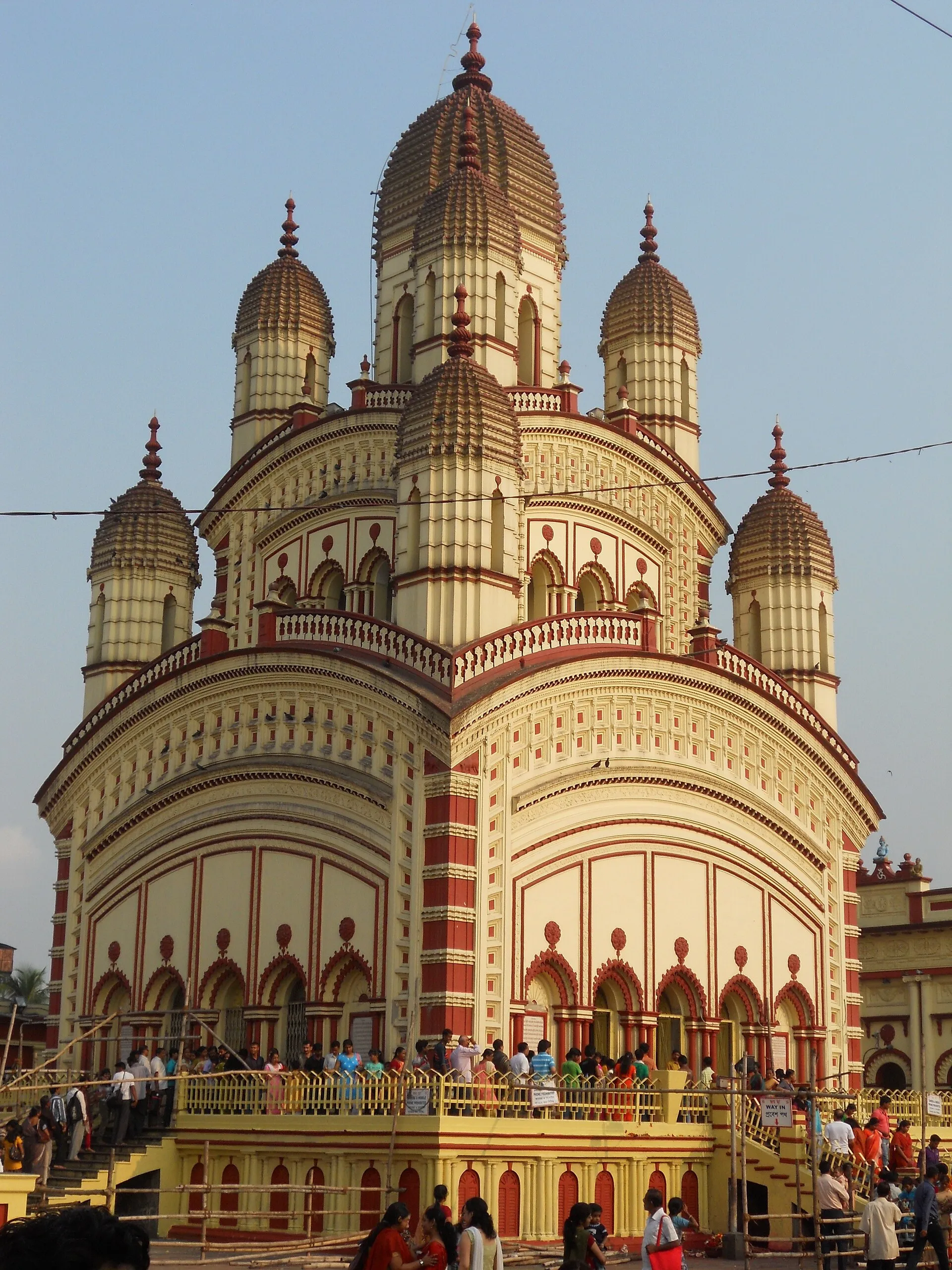
The main Kali temple is a nine-spired navaratna structure housing the black stone image of Goddess Bhavatarini (Kali), adorned daily with flowers and red hibiscus. Twelve identical aatchala (eight-roofed) Shiva shrines line the river ghat, each containing a Shiva linga. The Panchavati grove is the cluster of five sacred trees under which Ramakrishna practiced intense meditation and experienced divine visions. Ramakrishna's small chamber, where he lived and taught, is preserved with his personal belongings. The Hooghly River ghat features stepped bathing areas where pilgrims and priests perform morning rituals at the water's edge. It was here that Ramakrishna taught Swami Vivekananda, who later electrified the 1893 Parliament of Religions in Chicago.
Visitor Etiquette
Remove shoes and socks before entering the main temple premises — designated storage is provided at the entrance. Dress modestly: shoulders and knees must be covered for all visitors; men may be required to remove shirts as an act of devotion in certain areas (wraps are available). Non-Hindu visitors are welcome throughout the complex, consistent with Ramakrishna's universalist philosophy, but should avoid obstructing the sanctum during active puja hours. Tuesdays and Saturdays are auspicious days for Kali worship and draw the largest crowds — arriving on other weekday mornings provides a calmer, more contemplative experience. Photography of the exterior, the twelve Shiva temples along the river ghat, and the general grounds is generally permitted; photography inside the main Kali temple during worship is typically restricted, so observe what other visitors do and ask the temple staff. Maintain a respectful silence near active worship areas, step back when priests carry offerings past, and follow the clockwise circumambulation direction. If you wish to offer flowers at the shrines, purchase them from vendors at the entrance gate rather than bringing your own.
When to Visit
Morning session: 6:00 AM - 12:30 PM. Afternoon session: 3:00 PM - 8:30 PM. Closed midday: 12:30 PM - 3:00 PM for rest. Best time: early morning (6-8 AM) for the most devotional atmosphere and river views.
Admission and Costs
Temple entry: free. Guided visit: ₹500-1,000 for a 1-hour spiritual and historical tour. Getting there from central Kolkata: ₹200-400 by taxi (30-45 minutes) or ferry from Belur Math across the river.
Tips for Visitors
Combine with Belur Math: the Ramakrishna Mission headquarters is directly across the Hooghly. A ferry connects the two -- the complete Ramakrishna pilgrimage. Avoid Tuesdays and Saturdays: these are auspicious days for Kali worship and the temple gets extremely crowded. Photography: Exterior photography is fine. Interior photography is generally restricted during worship. The Victoria Memorial and Howrah Bridge are south in central Kolkata and make a full day when combined with Dakshineswar.
Frequently Asked Questions
What is the most rewarding season to visit Dakshineswar Kali Temple?
October through February brings Kolkata's most pleasant weather and coincides with major festivals -- Durga Puja in October and Dev Deepawali in November fill the temple and Hooghly riverbank with spectacular illumination and devotional fervor. December through February offers cool, dry mornings ideal for the early devotional atmosphere and river views. The June-through-September monsoon makes the riverside ghat slippery and the journey from central Kolkata much longer due to flooding.
When can tourists enter Dakshineswar Kali Temple?
Morning session: 6:00 AM – 12:30 PM. Afternoon session: 3:00 PM – 8:30 PM. Closed midday: 12:30 PM – 3:00 PM for rest. Best time: Early morning (6–8 AM) for the most devotional atmosphere and river views
How much does it cost to visit Dakshineswar Kali Temple?
Temple entry: Free. Guided visit: ₹500–1,000 for a 1-hour spiritual and historical tour. Getting there from central Kolkata: ₹200–400 by taxi (30–45 minutes) or ferry from Belur Math across the river
What should visitors know before visiting Dakshineswar Kali Temple?
Dress modestly: Temple requires covered shoulders and knees. Remove shoes before entering. Non-Hindu visitors welcome: The temple is open to all faiths — fitting, given Ramakrishna's universalist philosophy.