
Planning Your Trip to Berlin: A Complete First-Timer's Guide
Everything you need to plan a memorable Berlin trip — from the best neighborhoods to stay in and must-see Cold War sites to honest tips on costs, transport, and finding great local guides.
Read the full guideUpdated · 10 min read
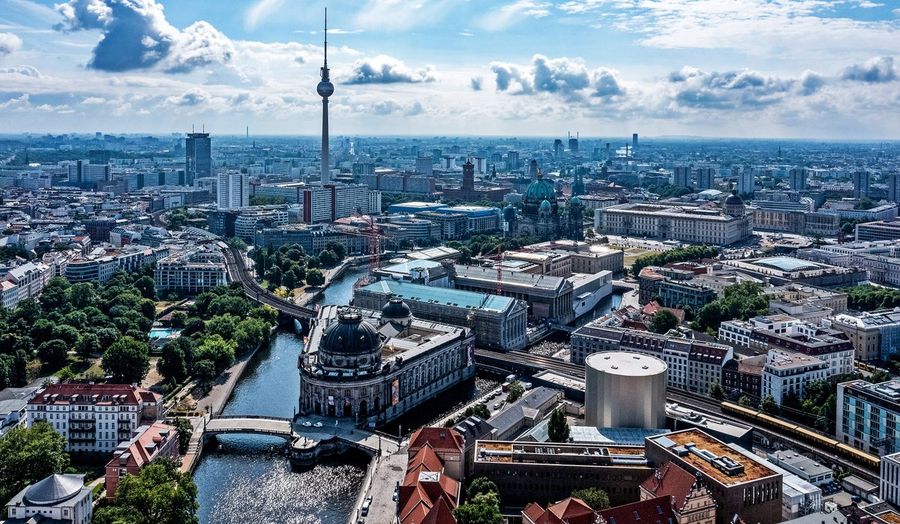
Plan three to four days for Berlin, since the city is large and spread out. Base yourself in central Mitte or livelier Kreuzberg, ride the integrated U-Bahn, S-Bahn, tram, and bus network across zones A, B, and C, and prioritise Cold War and Nazi-era sites alongside Museum Island's five institutions.
Berlin resists easy summaries. It is simultaneously one of Europe's most historically layered capitals and its most forward-looking creative hub — a city where bullet-scarred apartment facades stand beside radical new architecture, and where the same street can house a memorial to the victims of Nazi persecution and an internationally acclaimed nightclub. For first-time visitors, making sense of all this can feel overwhelming. This guide breaks it down into manageable steps.
When is the best time to visit Berlin?
May to September brings warm 18–25°C days, outdoor festivals, and long northern evenings, though July and August draw the biggest crowds; the shoulder months of May, June, and September offer equal weather for less. October and November stay mild and cheap, while winter delivers world-class Christmas markets and legendary club culture.
Berlin's climate rewards strategic timing. May to September brings warm days (18–25°C), outdoor festivals, and the long northern European evenings that make the city's parks feel magical. July and August draw the most crowds and push hotel prices up — if you can, the shoulder months of May, June, and September offer better value with equally good weather.
October and November turn grey but stay mild enough for sightseeing, and hotel rates drop sharply. Winter (December–February) is cold and often overcast, but Berlin's Christmas markets are genuinely world-class, and the club culture that the city is globally famous for burns brightest in the dark months when locals need something to do.
Avoid major trade fairs like ITB Berlin (March) and IFA (September) unless you are attending them — hotel prices double and rooms become scarce citywide.
Which Berlin neighbourhood should you stay in?
Where you stay shapes the trip. Mitte is the historical centre, walkable to Brandenburg Gate and Museum Island but a ride from the creative districts. Prenzlauer Berg is leafy and liveable, Kreuzberg and Neukölln offer street food and midnight bars, and Charlottenburg in the former West suits calmer, upscale-shopping travellers.
Berlin's districts are distinct enough that where you stay shapes the trip you have. Consider these as starting points rather than firm recommendations:
Mitte is the historical and tourist centre — Brandenburg Gate, Museum Island, and the main government buildings are all here. Staying here makes iconic sights walkable but puts you a U-Bahn ride from the grittier creative neighbourhoods.
Prenzlauer Berg was the bohemian heart of East Berlin and is now one of the city's most liveable residential areas, lined with tree-shaded streets, independent cafés, and a density of good mid-range restaurants. It's an easy walk to Museum Island and close enough to Hackescher Markt for nightlife without being in the thick of it.
Kreuzberg and Neukölln are better choices if you want immediate access to street food markets, independent galleries, and bars that open at midnight. The neighbourhoods can feel a bit rough in places — this is part of the character — but they are generally safe and the local creative energy is palpable.
Charlottenburg in the former West Berlin offers upscale shopping along the Kurfürstendamm and a calmer atmosphere. It suits travellers who prefer fewer crowds and don't mind being slightly further from the main historical attractions.
How do you get around Berlin?
Berlin's S-Bahn, U-Bahn, tram, and bus network is extensive and reliable, covered by a day ticket or the WelcomeCard, which adds museum discounts. Because the city sprawls, factor transit time between sights and use the BVG Fahrinfo app. Cycling suits the flat central areas, with dedicated lanes and affordable rental schemes.
Berlin's public transport network (S-Bahn, U-Bahn, trams, and buses) is extensive and reliable. A day ticket (Tageskarte) or the Berlin WelcomeCard, which includes unlimited public transport plus museum discounts, will cover most people's needs.
The city is large and spread out — Amsterdam and Vienna feel compact by comparison — so factoring in transit time between sights is important. Download the BVG Fahrinfo app for real-time route planning. Most tickets can be purchased at platform machines that accept both cards and cash, though it is worth having a small amount of cash available for emergencies.
Cycling is a practical option in the flatter central areas. Berlin has an extensive network of dedicated bike lanes and several affordable rental schemes.
How should you approach Berlin's key historical sites?
Start with the Berlin Wall Memorial on Bernauer Strasse, the city's most powerful and least commercialised site, with a preserved death strip and watchtower; entry is free, allow two hours. Add the free Holocaust Memorial's 2,711 stelae and Topography of Terror, and skip commercialised Checkpoint Charlie for its serious museum nearby.
The Berlin Wall Memorial (Gedenkstätte Berliner Mauer) on Bernauer Strasse is the single most powerful memorial site in the city. A preserved section of the Wall's death strip, complete with watchtower and documentation centre, it communicates the physical reality of division more viscerally than any museum exhibit. Entry is free; allow at least two hours.
The Holocaust Memorial (Denkmal für die ermordeten Juden Europas) near the Brandenburg Gate is a striking field of 2,711 concrete stelae of varying heights. The underground information centre beneath it provides historical context. It is open daily and free to enter.
Checkpoint Charlie is technically an important crossing point in Cold War history but the current site — a replica booth surrounded by souvenir shops and costumed actors charging for photographs — can feel like a tourist trap. If you want to understand the checkpoint's role properly, visit the Checkpoint Charlie Museum (Haus am Checkpoint Charlie) nearby, which has genuine historical artefacts and survivor testimonies.
Topography of Terror occupies the site of the former SS and Gestapo headquarters. The outdoor exhibition, built along the surviving basement walls of the Reich Security Main Office, is free and one of the most sobering historical experiences in Europe.
What should you prioritise on Museum Island?
Museum Island is a UNESCO site holding five institutions on a Spree island. The Pergamon Museum houses the Ishtar Gate, while the Neues Museum holds Nefertiti's bust; together they make a full day if you have time for only one. Note the Pergamon's main hall is partly closed for renovation until 2027.
Berlin's museum complex on a Spree island in the city centre is a UNESCO World Heritage Site containing five world-class institutions. The Pergamon Museum houses the reconstructed Pergamon Altar and Ishtar Gate from ancient Babylon. The Neues Museum holds the iconic bust of Nefertiti. If you only have time for one, the Pergamon and Neues together make a full day.
Note that the Pergamon's main hall is currently undergoing renovation and will be partially closed until 2027 — check the SMB website before visiting to understand which galleries are open.
The Berlin Museum Pass (three consecutive days, multiple museums) is worth calculating against your planned visits.
Is hiring a local guide worthwhile in Berlin?
Yes, Berlin's layered history rewards guided interpretation that self-guided audio tours rarely match, connecting the former Wall's geography to today's neighbourhoods. Look for guides licensed by the Berlin Senate Department, many specialising in the Nazi period, Cold War, or street art. Walking tours average €12–20; private half-days start around €150–180.
Berlin's layered history genuinely rewards guided interpretation. A specialist guide can connect the dots between sites in ways that self-guided audio tours rarely achieve — explaining, for instance, how the geography of the former Wall relates to the neighbourhoods that exist today, or why certain Cold War decisions had the consequences they did.
Look for licensed guides certified by the Berlin Senate Department. Many freelance guides specialise in specific themes: the Nazi period, Cold War history, Jewish Berlin, street art, or the contemporary political landscape. Themed walking tours run daily and average €12–20 per person; private guide hire typically starts at €150–180 for a half-day. Book in advance in summer when the best guides fill quickly.
What should you eat, and which markets are worth it?
Berlin's food culture extends well beyond currywurst, though Curry 36 in Kreuzberg is worth it for context. The city's Turkish community makes some of Europe's best döner — queue at Mustafa's Gemüse Kebab near Mehringdamm. For markets, the Sunday Mauerpark flea market and the Maybachufer Turkish market are genuine features of local life.
Berlin has a serious and diverse food culture that extends well beyond currywurst (though the original Curry 36 stand in Kreuzberg is worth a visit for context). The city's large Turkish community has made Berlin home to some of Europe's best döner kebab — try Mustafa's Gemüse Kebab near Mehringdamm if you are prepared to queue.
Weekend markets are a genuine feature of Berlin life. The Mauerpark flea market on Sunday mornings in Prenzlauer Berg mixes vintage clothing, vinyl records, and street food in a reliably entertaining way. The Turkish market along the Maybachufer canal runs Tuesday and Friday afternoons.
How much should you budget for Berlin?
Berlin is affordable by Western European standards, if less cheap than a decade ago. Hostel dorms start around €20–35 a night, central mid-range hotels run €90–160, and restaurant meals range from €8–12 at an Imbiss to €25–45 for dinner. Museum entry spans free sites to €12–19 for the State Museums.
Berlin is relatively affordable by Western European capital standards but less spectacularly cheap than it was a decade ago. Budget accommodation (hostel dorms) starts around €20–35 per night; mid-range hotels in central locations run €90–160. Restaurant meals range from €8–12 for a filling lunch at a local Imbiss to €25–45 for dinner at a sit-down restaurant. Craft beer and natural wine scenes are thriving; expect to pay €4–6 for a glass in most bars.
Museum entry ranges from free (Holocaust Memorial, Topography of Terror, Berlin Wall Memorial) to €12–19 for the major State Museums institutions.
What belongs on your practical checklist?
A few habits keep Berlin smooth: validate your transport ticket before boarding, carry cash for the many cash-only restaurants and markets, and book major museum tickets online to skip summer queues. Allow an extra day for Potsdam's Sanssouci Palace, an hour away by S-Bahn, and pace yourself if nightlife interests you.
- Validate your public transport ticket before boarding (machines on platforms or inside trams)
- Carry some cash — many independent restaurants and markets are still cash-only
- Book major museum tickets online to skip queues, especially in summer
- Allow an extra day if you want to explore the surrounding Brandenburg landscape (Potsdam's Sanssouci Palace is an hour by S-Bahn)
- Berlin nightlife rarely starts before midnight — if that world interests you, pace yourself during daylight hours
Berlin rewards travellers who approach it without fixed expectations. The city has been rebuilt, reunified, and reinvented so many times that its most interesting feature may be the collision between all those layers happening in real time. Give it three or four days and it will show you something you did not expect.
Frequently Asked Questions
How many days should I spend in Berlin?
Three to four days lets you cover the major historical sites, a couple of world-class museums and at least one neighbourhood beyond the centre, given how spread out the city is.
What are the must-see Cold War sites in Berlin?
The East Side Gallery, Checkpoint Charlie, the Berlin Wall Memorial on Bernauer Strasse and the DDR Museum together give a full picture, with the Bernauer Strasse memorial being the most informative and least commercialised.
Is Berlin's public transport easy to use?
Yes. The U-Bahn, S-Bahn, trams and buses share one ticketing system covering zones A, B and C. Validate your ticket before boarding, as the network runs on an honour system with spot checks.
Which Berlin neighbourhood should I stay in?
Mitte is central and convenient for first-timers, while Kreuzberg and Friedrichshain offer livelier nightlife and food, and Prenzlauer Berg suits travellers wanting a quieter, leafier base.