
Getting Around Cork: A Practical Transport Guide
How to get around Cork: walk the island centre, ride Bus Éireann with a Leap Card, and reach Cobh, Blarney, and Kinsale car-free from Kent Station.
Read the full guideUpdated · 11 min read
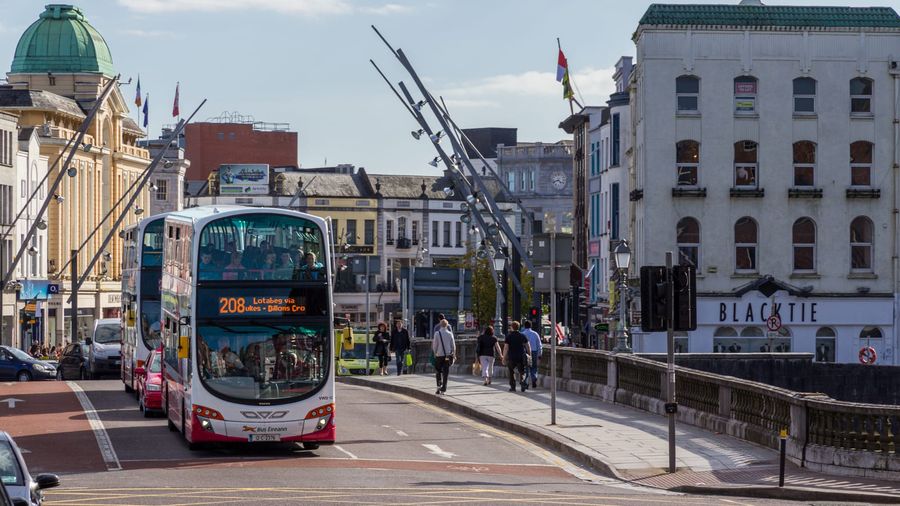
Cork is an easy city to move around once you grasp its shape: the centre sits on a flat island in the River Lee, small enough to cross on foot, while a bus-only network and a short commuter rail line handle everything beyond walking range. Pay with a TFI Leap Card, arrive at Kent Station or Cork Airport rather than driving in, and save a rental car only for West Cork.
Cork was built on a marshy island where the River Lee splits into two channels, and that geography still dictates how you get around. The main streets — St Patrick's Street, the Grand Parade, Oliver Plunkett Street — all sit on the flat island between the channels, so the heart of the city is genuinely walkable. The complication is the hills: the land rises steeply to the north toward Shandon and to the south toward St Fin Barre's, which is why Cork rewards knowing when to walk, when to catch a bus, and when the train or a day-trip coach does the heavy lifting. Here is how the pieces fit together.
Is Cork's city centre walkable?
Yes — the island centre is compact and flat, and almost every headline city sight is within a fifteen-minute walk of St Patrick's Street. The only efforts worth saving your legs for are the climbs north to Shandon and south to the cathedral quarter.
The island between the two channels of the Lee is where you will spend most of your time, and it is small. From the English Market on the Grand Parade you can reach the quays, the main shopping streets, and the bridges across to both banks in a few minutes each. Walking is not just possible here; it is the fastest and most pleasant way to see the centre, and it costs nothing.
The two exceptions are uphill. Crossing the North Channel and climbing to ring the Shandon Bells is a short but genuinely steep pull, and the approach south to St Fin Barre's Cathedral also rises away from the river. Neither is far, but if you are tired or short on time, a single bus hop up the hill spares the gradient. For orientation, start on the island and let the two channels and their bridges anchor your mental map.
How Cork's buses work: Bus Éireann and the Leap Card
Cork's public transport is bus-only, run by Bus Éireann under the national Transport for Ireland (TFI) brand. There is no tram or metro. The cheapest way to ride is a TFI Leap Card, which you tap on boarding for a lower fare than cash.
City bus routes fan out from the centre to the suburbs and the harbour towns, with Parnell Place the main bus station and the hub for regional services. For visitors, the single most useful piece of advice is to get a Leap Card — the reusable contactless smart card used across Ireland. It gives a discounted fare on every journey compared with paying the driver in cash, and it saves fumbling for exact change.
| How to pay | Roughly | Best for |
|---|---|---|
| TFI Leap Card | Discounted per ride; top up as needed | Any visitor taking more than one or two buses |
| Cash to the driver | Full single fare | A one-off ride with no card to hand |
| TFI Go / contactless | Varies by rollout | Travellers who prefer their phone or bank card |
Buy and top up a Leap Card at newsagents showing the TFI sign and at machines around the city. Fares and any free-transfer window are set nationally and change periodically, so check the current prices on the TFI website before you travel rather than relying on a figure from an old guide. Plan any bus trip in the TFI journey planner, which shows live times and the right route number.
Getting in from Cork Airport
Bus Éireann route 226 is the simple, cheap way between Cork Airport and the city. It links the airport with the city centre and Kent Station in about 20–30 minutes and runs frequently, for a fraction of a taxi fare.
Cork Airport sits roughly 8 kilometres south of the centre, close enough that you never need to plan an elaborate transfer. The 226 bus is the workhorse connection, calling at the city centre and the main train station so you can continue by rail or on foot to most accommodation. Pay with your Leap Card or buy a ticket, and check the live timetable on the TFI journey planner, as frequencies thin in the early morning and late evening.
A taxi is the alternative when you land outside bus hours or with heavy luggage; ranks operate at the terminal, but expect to pay substantially more than the bus for the same short trip. For most daytime arrivals, the 226 is both faster overall and far cheaper.
Arriving by train: Kent Station and the harbour line
Cork's rail station, Kent, sits just across the river from the centre — a ten-minute walk — and connects the city to Dublin by intercity train and to Cobh and Midleton by frequent commuter rail.
Kent Station, run by Iarnród Éireann, is Cork's gateway for anyone arriving by rail. Intercity services link it to Dublin Heuston in roughly two and a half hours, making a car-free visit from the capital entirely practical. From the station it is a short, level walk across the Lee into the heart of the island centre.
The station is also the start of the Cork Suburban Rail line, the one piece of local rail you will actually use. Trains run out along the harbour to Cobh — the Titanic's last port of call — in about 25 minutes, and on the other branch to Midleton, home of the Jameson distillery experience. For these harbour-side destinations the train is more comfortable and more scenic than the road, and it sidesteps parking entirely.
Cycling Cork: TFI Bikes and the Lee Fields
For the flat island centre and the riverside, cycling is quick and cheap. TFI Bikes, Cork's public bike-share scheme, has docking stations across the central area, and the Lee Fields path offers a car-free ride along the river's western approach.
Cork's TFI Bikes share scheme lets you grab a bike from one docking station and return it to another, which suits short hops around the flat centre far better than the hilly suburbs. Sign up through the scheme's app or at a station terminal, and keep trips short to stay within the cheapest fare band.
The most enjoyable ride is the Lee Fields riverside path on the western edge of the city, a green, level route that gets you away from traffic. Within the centre, be mindful that the streets are busy and some are one-way; walk your bike through the most crowded pedestrian stretches. Leave the steep northern and southern slopes to the bus unless you are a confident rider.
Driving and parking: when a car actually helps
Skip the car for the city — the centre has restricted, one-way streets and pricey parking — but a rental makes sense for exploring West Cork, where public transport thins to almost nothing.
Driving into central Cork is more hindrance than help. The island's street pattern is heavily one-way, through-traffic is discouraged, and multi-storey car parks charge accordingly. If you are staying in the city, you do not need a car at all, and a park-and-ride on the southern approach lets day-visitors leave the vehicle on the edge and ride a shuttle in.
Where a car comes into its own is the drive west. Beyond Kinsale and Clonakilty, the headlands, fishing villages, and food producers of West Cork are strung along roads that scheduled buses barely touch. If that coastline is your goal, hire the smallest car that meets your needs — the lanes are narrow — and pick it up as you leave the city rather than parking it unused for days.
Day trips: Blarney, Kinsale, and Cobh without a car
Cork's best day trips are all reachable without driving. The train serves Cobh, and Bus Éireann routes run to Blarney Castle and down to the harbour town of Kinsale — each a comfortable half-day from the centre.
The city makes an excellent base precisely because its headline excursions are tied into the public network. The table below shows the practical options; confirm current times and fares on the TFI and Iarnród Éireann planners before you set out.
| Day trip | Best mode | Rough journey | Notes |
|---|---|---|---|
| Cobh | Train from Kent Station | ~25 min | Scenic harbour line; the Titanic's final port |
| Blarney Castle | Bus Éireann from Parnell Place | ~25 min | For the castle grounds and the famous stone |
| Kinsale | Bus Éireann from Parnell Place | ~50 min | Seafood, Charles Fort, and 1601 battle history |
| Midleton | Train from Kent Station | ~25 min | Whiskey distillery experience |
For Cobh and Midleton the train wins on comfort and scenery; for Blarney and Kinsale the bus is the natural choice. All four work as half-day outings, so you can pair two in a single day — a morning at Blarney and an afternoon in the city, say — without ever touching a steering wheel.
Which guided tours are worth it, and what do they cost?
A walking tour of the island centre and a food tour of the English Market are the two experiences that repay the outlay, with day-trip tours to Blarney, Kinsale, and West Cork the next step up for travellers who would rather not plan the logistics themselves.
Cork's guided offerings play to its strengths — its food culture, its compact history, and the coast beyond. The table shows the main options and rough per-person costs, which vary by operator and season.
| Tour type | Roughly | Why take it |
|---|---|---|
| City walking tour (2–3 hrs) | €15–25 | History and orientation on foot across the island |
| English Market food tour (2 hrs) | €30–50 | Tastings and the market's two-century story |
| Kinsale or Blarney day trip | €45–75 | Transport and a guide bundled into one booking |
| Private West Cork day guide | €280–420 | A tailored run along the coast with your own driver |
A walking tour is the best-value introduction, unpacking the city's rebel history and its island geography in a couple of hours. A food tour of the English Market turns a browse into a proper education in tripe, drisheen, and West Cork cheese. And if you would rather someone else handle the roads, an organised day trip folds the transport and the commentary into a single price — the easy option for Kinsale, Blarney, or the longer West Cork coast.
Once you have the transport sorted, the Cork city guide covers what to see when you arrive — from the market and the bells to the cathedral on the city's founding ground.
Frequently Asked Questions
Do you need a car to visit Cork?
Not for the city itself. Cork's centre is a compact island you cross on foot, and Bus Éireann reaches Cobh, Blarney, and Kinsale on scheduled routes. A car only earns its keep if you intend to drive deep into West Cork — the headlands and villages beyond Clonakilty that have no useful public transport. For a city-and-day-trips visit, arrive by train or bus and skip the rental.
What is the cheapest way to pay for buses in Cork?
Use a TFI Leap Card. The national contactless smart card gives a lower fare than cash on every Bus Éireann city journey, and tapping on as you board is faster than counting coins for the driver. You can buy and top up a Leap Card at newsagents displaying the sign and at machines around the city. Check current fares and any transfer window on the TFI website before you travel, as they are revised periodically.
How do you get from Cork Airport to the city centre?
Take Bus Éireann route 226, which links Cork Airport with the city centre and Kent Station in roughly 20–30 minutes and runs frequently through the day. It is far cheaper than a taxi, which costs considerably more for the same 8-kilometre trip. Pay with a Leap Card or buy a ticket, and confirm the current timetable and stop on the TFI journey planner before you fly.
Is there a tram or metro in Cork?
No. Cork's public transport within the city is bus-only, run by Bus Éireann under the Transport for Ireland brand. The only rail inside the area is the commuter line from Kent Station out to Cobh and Midleton. For getting between city-centre sights, walking is almost always quicker than waiting for a bus.
What is the best way to reach Cobh from Cork?
Take the train. The Cork Suburban Rail line runs from Kent Station directly to Cobh in about 25 minutes, hugging the harbour for much of the route — a scenic, reliable trip that beats driving and parking. Trains run roughly hourly; check Iarnród Éireann for the current timetable, and consider a Leap Card for the fare.