
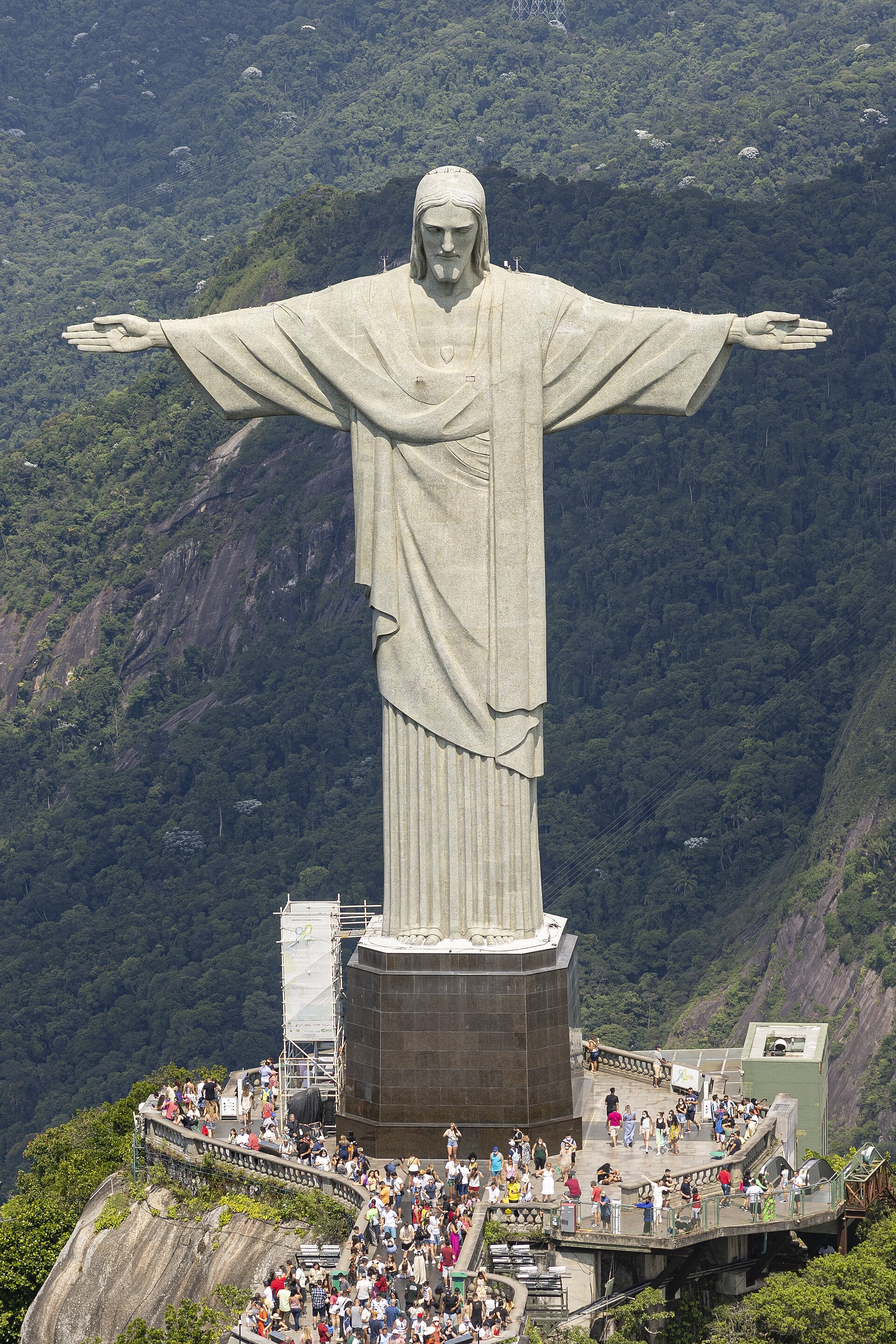

Overview
Cristo Redentor (Christ the Redeemer) is the 98-foot Art Deco statue of Jesus Christ that has presided over Rio de Janeiro from the summit of 2,300-foot Corcovado Mountain since its inauguration in 1931. Designated one of the New Seven Wonders of the World in 2007, the statue offers 360-degree panoramic views encompassing Sugarloaf Mountain, Copacabana, Ipanema, and Guanabara Bay. French sculptor Paul Landowski designed the figure while Brazilian engineer Heitor da Silva Costa oversaw nine years of construction, assembling the statue from soapstone tiles shipped from Sweden over a reinforced concrete and steel frame. The outstretched arms span 28 meters, chosen to symbolize peace and universal welcome over a city long marked by social divisions. A small chapel inside the pedestal, dedicated to Nossa Senhora Aparecida (Our Lady of Aparecida, Brazil's patron saint), hosts weddings and baptisms to this day. In 2014, a lightning strike chipped Christ's right thumb, a reminder that even icons require constant maintenance against Rio's tropical storms. The cog railway from Cosme Velho station is the most scenic route to the summit, winding through the dense Mata Atlantica (Atlantic Forest) of Tijuca National Park — the world's largest urban rainforest. Van tours offer a slightly cheaper and faster alternative, while guided tours combine transport with historical narrative that transforms the visit from a simple photo opportunity into an immersive encounter with Brazilian identity.
Spiritual Significance
Cristo Redentor was conceived as a symbol of Catholic faith presiding over a rapidly modernizing city during the 1920s, when Brazil's political and cultural elites debated the role of religion in the new republic. Inaugurated on October 12, 1931 — the feast day of Nossa Senhora Aparecida — the open-armed pose was deliberately chosen to represent universal welcome rather than judgment, a theological statement of divine embrace over a nation of profound social inequality. The small chapel inside the pedestal, dedicated to Our Lady of Aparecida, hosts weddings, baptisms, and regular devotional services, making this both a tourist landmark and an active place of worship. For many Cariocas the statue embodies not just religion but civic identity — it was illuminated in national colors when Brazil won the 2002 World Cup, draped in symbolic lighting during the 2016 Olympics opening ceremony, and projected with messages of solidarity during the COVID-19 pandemic. The statue's placement atop Corcovado within the Mata Atlantica rainforest adds an environmental dimension: Cristo watches over Tijuca National Park, a reminder that stewardship of creation accompanies spiritual aspiration.
Visitor Etiquette
Although Cristo Redentor functions primarily as a tourist destination, the chapel inside the pedestal is a consecrated space where religious services occur regularly. Dress modestly if you plan to enter the chapel — covered shoulders and knees are expected. The summit platform itself has no formal dress code, but respectful behavior is expected: avoid loud music from portable speakers, do not climb on railings or barriers for photos, and be mindful that for many Brazilian visitors this is a pilgrimage site, not merely a viewpoint. Photography is permitted everywhere on the summit platform, but be considerate of other visitors waiting for their turn at popular photo positions. The site is wheelchair accessible via elevators installed during the 2003 renovation.
When to Visit
Daily: 8 AM - 7 PM year-round. Best: Sunrise (8-9 AM) or late afternoon for fewer crowds and softer light. Avoid: 11 AM - 3 PM when tour bus waves create peak congestion at the summit. Weather check: Clouds at Corcovado's 710-meter altitude can completely obscure views — check the forecast before committing. The cog train departs every 20 minutes from Cosme Velho station and takes 20 minutes to reach the summit. December-February (Brazilian summer) is peak season with the longest queues.
Admission and Costs
Train + entry: R$98 (about $20) round trip from Cosme Velho. Van tour: R$80-100 per person (slightly cheaper, same summit access). Guided tour: R$150-250 with transport included. Private guide: R$500-800 for personalized experience with hotel pickup. Book 1-2 weeks ahead at paineirascorcovado.com.br — peak season slots (December-February) sell out fast.
Tips for Visitors
Book ahead: Peak season slots (December-February) sell out 1-2 weeks in advance. Weather is crucial: clouds at summit altitude can completely obscure views, so check the forecast before committing. Wear layers: the summit is significantly cooler and windier than sea level Rio de Janeiro. Bring sun protection: there is minimal shade at the top. The cog train from Cosme Velho is the most scenic route, but van tours are slightly cheaper and faster. Combine wisely: many visitors pair Cristo Redentor with Sugarloaf Mountain on the same day — do Christ the Redeemer in the morning and Sugarloaf for sunset. Photography: morning light illuminates the statue's face; afternoon visitors shoot into the sun.