
Observation Spots
Activities
- Streets Beach — the parkland's signature draw: a free, lifeguard-patrolled lagoon of white sand and clear, filtered water fringed by palms and subtropical planting, only a few hundred metres from the office towers across the river
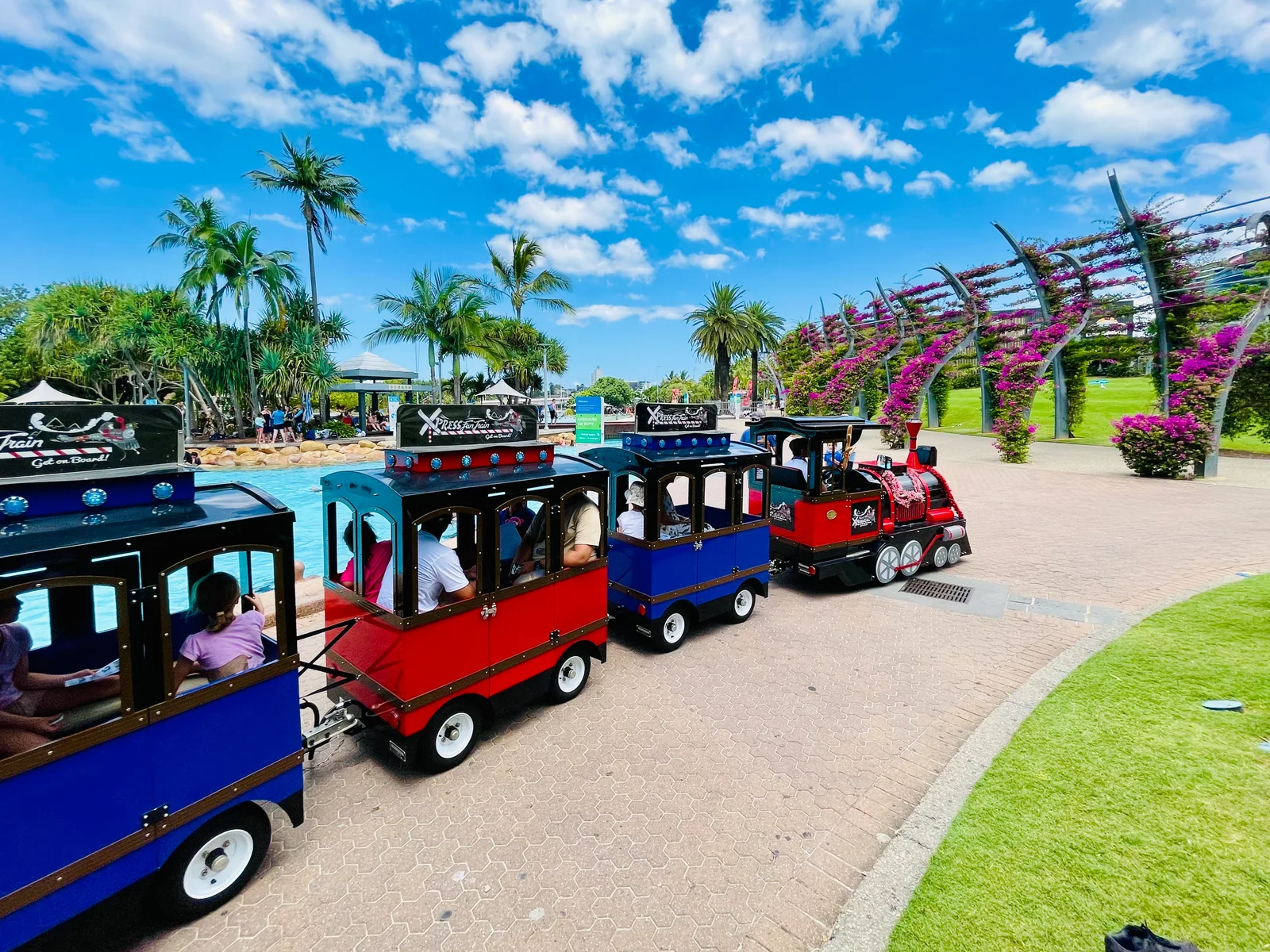
- The Grand Arbour — a near-kilometre walk beneath 443 bougainvillea-clad steel columns forms the parkland's spine, linking the Cultural Centre in the north to the dining precinct in the south in continuous shade
- Rainforest Walk — a genuine subtropical canopy of mature figs, ferns, and bunya pines threaded with boardwalks and a small waterfall, offering the coolest air in the parklands on a hot day
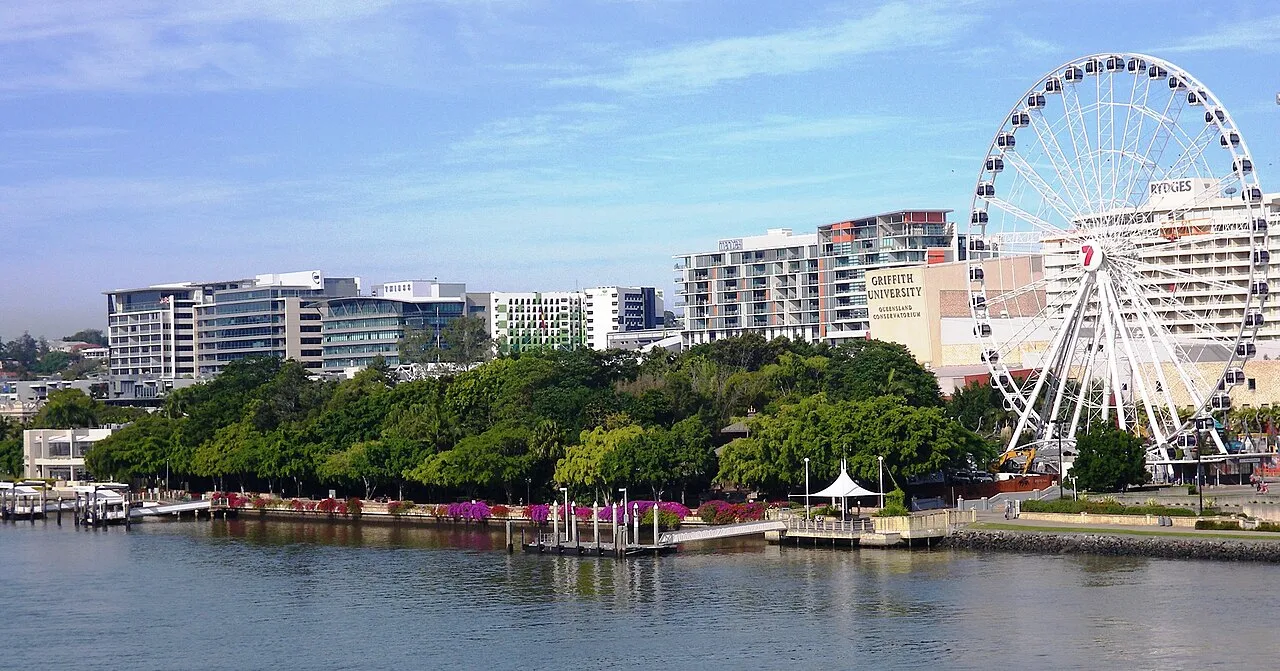
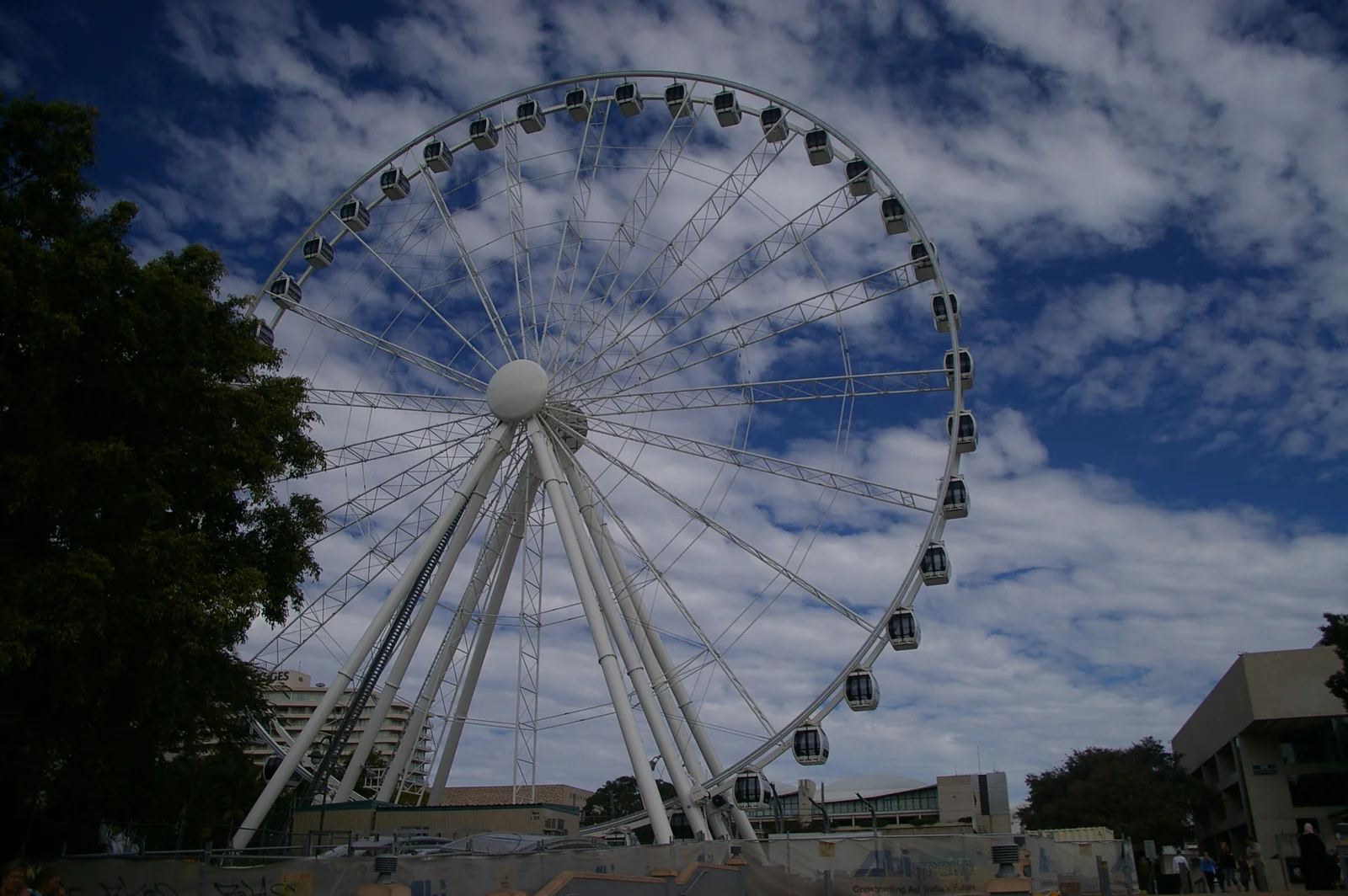
- The Wheel of Brisbane — a 60-metre observation wheel installed in 2008 ahead of Queensland's Q150 sesquicentenary and kept ever since, its 42 enclosed gondolas giving a slow 360-degree survey of the river bends and CBD
- Epicurious Garden — a public productive garden of herbs, vegetables, and fruit that visitors are invited to taste, with free weekend gardening workshops
- Collective Markets South Bank — open-air stalls of craft, design, vintage, and street food along Stanley Street Plaza on Friday evenings and weekends
- Riverside dining — Grey Street and Little Stanley Street form one of Brisbane's densest restaurant strips, from casual riverfront cafés to destination dining
- Cultural institutions — the Queensland Museum, GOMA, QPAC, and the State Library cluster within a five-minute walk, most of them free to enter
- The river itself — the free CityHopper and paid CityCat ferries call at South Bank, and the riverside Bicentennial Bikeway makes the parkland a hub for cyclists and runners
Seasonal Highlights
South Bank rewards visitors year-round, but the seasons reshape it. Autumn and winter (April to September) are the parkland's prime months: the subtropical humidity lifts, the sky stays clear, and mild, sunny days make the beach and promenades comfortable — this is peak season for outdoor markets and riverside dining. In late spring, Brisbane's jacaranda and poinciana trees flush the precinct and the surrounding Cultural Forecourt with purple and scarlet, while the Grand Arbour's bougainvillea peaks in vivid magenta. The single biggest night of the year is Riverfire, the fireworks spectacular that closes the Brisbane Festival each September — South Bank's lawns and riverside terraces are among the best free vantage points as pyrotechnics erupt from bridges, rooftops, and barges along the river. Summer (December to February) brings heat, humidity, and reliable afternoon thunderstorms that build after about 2 PM, but it is also when Streets Beach is busiest and most welcome, and the parkland glows through the Christmas holidays. Whatever the month, the mature figs of the Rainforest Walk stay green and shaded, so there is always somewhere cool to retreat.
South Bank Parklands timeline
- 1840s–1880s
South Brisbane wharf district
The river frontage the Turrbal and Jagera peoples knew as Kurilpa became a dense working precinct of wharves, warehouses, and terraces.
-
The great flood
One of several devastating floods — repeated again in 1974 — that scoured South Brisbane and hastened its later industrial decline.
-
World Expo 88
The six-month world's fair drew more than 18 million visits and transformed the derelict riverside into the focus of a new Brisbane.
-
South Bank Corporation formed
The Queensland government created a statutory body to hold the Expo site in public trust rather than sell it to developers.
-
Parklands open
On 20 June the reimagined parklands opened to the public, complete with Streets Beach and the retained Nepalese Peace Pagoda.
-
Goodwill Bridge opens
The pedestrian and cycle bridge linked South Bank directly to the CBD's Gardens Point, knitting the parkland into the city grid.
-
Wheel of Brisbane installed
The 60-metre observation wheel arrived ahead of Queensland's Q150 sesquicentenary the following year and became a permanent parkland landmark.
-
Flood and recovery
The Brisbane River flood inundated the parklands and Streets Beach; a rapid restoration reopened the precinct within months.
South Bank Parklands in Pictures
When to Visit
The parklands themselves never close: the lawns, promenades, playgrounds, and riverside paths are open 24 hours, 365 days a year, floodlit and patrolled at night. Streets Beach is supervised by lifeguards during daylight hours — broadly from around 6–7 AM until late afternoon or early evening, with the longest hours over the summer swimming season — and the lagoon is filtered and kept swimmable year-round. The adjacent cultural venues run their own schedules: the Queensland Museum and GOMA open daily 10 AM to 5 PM (free general entry), while QPAC performances are set by each season's programme. Collective Markets South Bank trade on Friday evenings, Saturdays, and Sundays along Stanley Street Plaza. The precinct is quietest — and at its most photogenic — on weekday mornings, when it belongs to lap-swimmers, runners, and school groups; it hits full energy on Friday and Saturday nights when the markets, ferries, and riverside restaurants all run together.
Admission and Costs
Parkland access, Streets Beach, the Grand Arbour, the Rainforest Walk, and the markets are all free. General entry to the Queensland Museum and GOMA is also free, with ticketed special exhibitions typically A$20–35 (US$13–23). A ride on the Wheel of Brisbane costs about A$22 (US$14) for adults and A$16 (US$10) for children. QPAC performances range from roughly A$40 to A$150+ (US$26–100+) depending on the production. Meals follow standard Brisbane rates — breakfast A$15–25 (US$10–16), lunch A$20–35 (US$13–23), dinner mains A$30–55 (US$20–36). Parking in the South Bank lots or nearby streets runs A$5–20 (US$3–13) by duration, though the free CityHopper ferry and the adjacent South Bank train and busway stations make driving unnecessary for most visitors.
The Case for a Guide
- Cultural-precinct navigation — a good guide sequences the parkland, the standout galleries within the Queensland Museum, GOMA's current exhibitions, and the riverside walks into a coherent half-day that skips the queues and finds the most rewarding rooms inside each building
- Expo 88 and the making of modern Brisbane — the story of how a world's fair remade this stretch of river is a genuine lesson in civic ambition, and it explains almost everything a visitor sees, from the Nepalese Peace Pagoda to the very existence of a beach in the city centre
- River orientation — a guide can explain how the Brisbane River's tight meanders shaped the city, and why South Bank's position opposite the CBD makes it the natural gathering point for Brisbane's public life, from Riverfire to lazy Sunday markets
- Food knowledge — the best café or restaurant on Grey Street shifts constantly; a local guide steers you past the obvious frontages to the places genuinely worth your time
Tips for Visitors
The Goodwill Bridge crossing to the CBD's Gardens Point is one of Brisbane's most pleasant urban walks, best at dusk when the city lights come up and the river turns gold. Visit the Nepalese Peace Pagoda early, before the crowds, when the low sun rakes across its carved timber and bronze detailing. On a hot day the Rainforest Walk is the parkland's secret — a true subtropical canopy that drops the temperature several degrees and makes you forget the city around you. Claim a riverside spot on the lawns well before dark if you are in town for Riverfire in September; the free vantage points fill hours ahead. Arrive at Streets Beach early on summer weekends to beat both the crowds and the afternoon storms. Pair a morning here with an afternoon Story Bridge climb downstream, a visit to the Queensland Museum next door, or a river cruise on to Lone Pine Koala Sanctuary — all of them connect to South Bank by the same Brisbane riverfront and ferry network.
Frequently Asked Questions
Is South Bank Parklands free to visit?
The parklands, beach, outdoor markets, and riverfront paths are entirely free and open 24 hours. Individual attractions within the precinct — the Queensland Museum, Gallery of Modern Art (GOMA), and Queensland Performing Arts Centre (QPAC) — have their own entry policies; most museum exhibitions are free while some special exhibitions charge A$20–35. The man-made Streets Beach is free for swimming. The numerous restaurants and cafés along Stanley Street Plaza and Grey Street are priced at standard Brisbane restaurant rates.
How long should I spend at South Bank?
A relaxed half-day covers the main parkland areas, a swim at Streets Beach, and a quick tour through the Queensland Museum or GOMA. A full day allows a thorough museum visit, the rainforest walk, a river cruise to or from the city, and a meal in the evening dining precinct along Grey Street. South Bank anchors well with an afternoon Story Bridge climb or a morning at the Queensland Museum.
How do you get to South Bank Parklands?
South Bank train station is directly adjacent to the parklands, serviced by multiple lines from Central Station in the CBD across the river. The free CityHopper ferry stops at South Bank Wharf every 30 minutes, connecting directly to the CBD waterfront and Kangaroo Point. The Goodwill Bridge pedestrian and cycle bridge links South Bank directly to the CBD's Gardens Point — a 5-minute walk.
Do I need to book anything ahead for South Bank?
For most visits, no — the parklands, Streets Beach, and the markets are all free and unticketed, so you can simply turn up. Book ahead only for ticketed special exhibitions at the Queensland Museum or GOMA, QPAC performances, and busy weekend dinners on Grey Street. The one date that fills up is Riverfire in September — the free riverside vantage points are first-come, so arrive hours early, and any restaurant with a river view should be reserved weeks in advance.
Is South Bank Parklands accessible for wheelchairs and prams?
Yes — the parklands are flat, paved, and almost entirely step-free, with wide sealed promenades, ramps, and accessible restrooms throughout, making them easy for wheelchairs and prams. Streets Beach has a gently sloping, sand-free accessible entry into the shallow end of the lagoon, and the adjacent Queensland Museum, GOMA, and QPAC are all wheelchair-accessible. South Bank train station and the CityHopper ferry are both step-free, and accessible parking is available in the precinct's car parks.