
Architecture
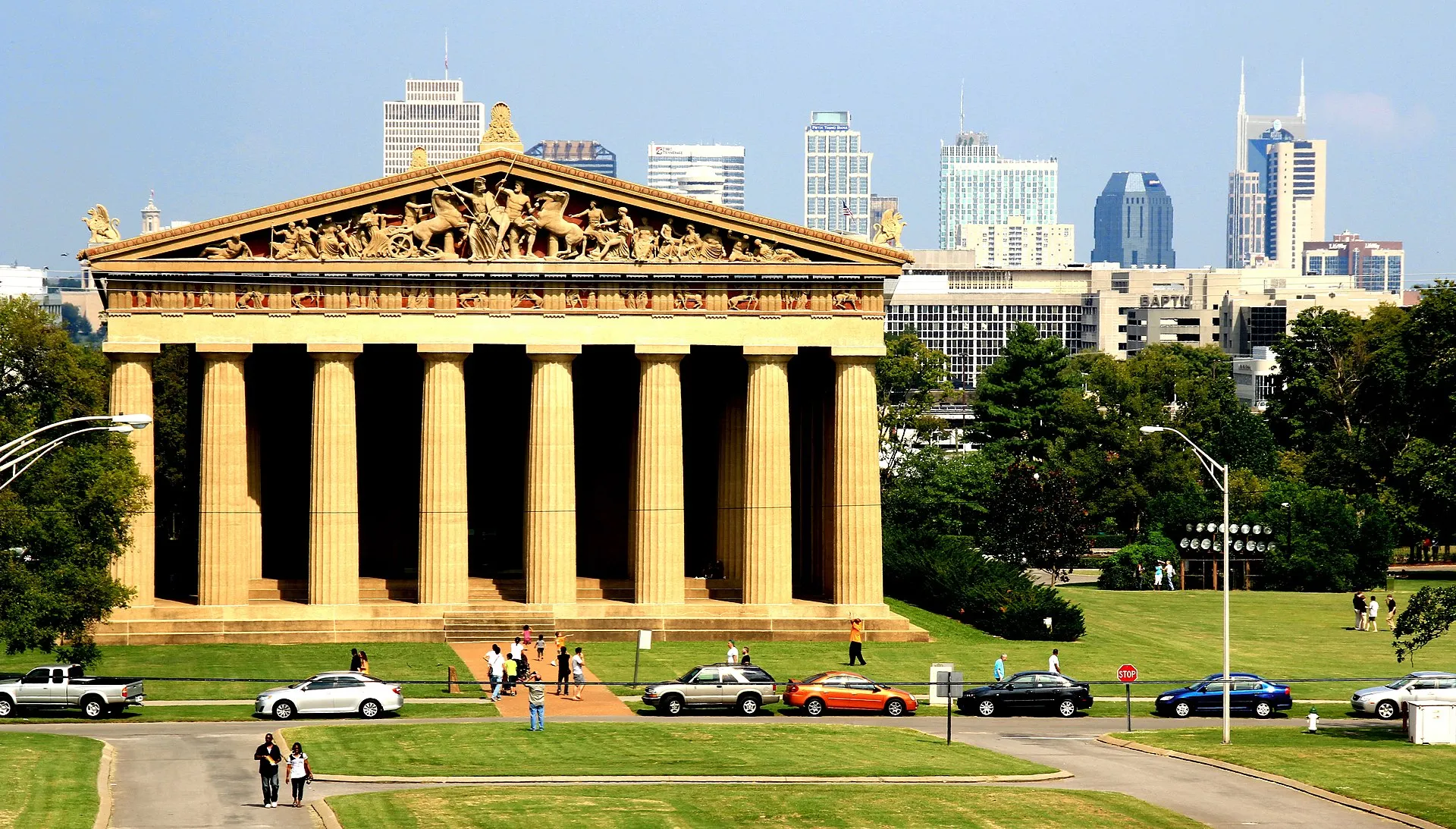
Athena Parthenos: The 42-foot gilded statue is the centerpiece - standing in the naos (inner chamber) looking up at Athena recreates the experience ancient Athenians would have had visiting the original temple. Doric column details: Each of the 46 exterior columns was built to the exact dimensions of the Athens original, including the subtle entasis (gentle swelling) that creates an optical illusion of straightness. Cowan Collection: 63 paintings on the lower level include works by Church, Bierstadt, and other luminaries of the Hudson River School and American realism. Reflecting pool: Walk to the eastern end of Centennial Park to see the Parthenon reflected in the long pool - the most photogenic approach and the intended first impression. Athena's shield: Look closely at the exterior face of Athena's shield for the relief sculpture of the battle between Greeks and Amazons, recreated from ancient descriptions. Centennial Park: The surrounding 132-acre park offers a lake, walking trails, a dog park, and the Centennial Art Center - plan time to explore beyond the Parthenon itself
Historical Significance
Mathematical precision defines every aspect of this structure, from the entasis of the columns - that subtle swelling that creates the optical illusion of perfect straightness - to the proportional relationships that ancient Greek architects calculated over two millennia ago. Guides illuminate these connections between Nashville's concrete replica and the marble original on the Athenian Acropolis, explaining why these mathematical ratios mattered to Phidias and his contemporaries and how the builders of 1920s Tennessee achieved such faithful reproduction using nothing but published measurements and photographs. Before Nashville became Music City, it was the Athens of the South, a nickname earned through its remarkable concentration of colleges and universities in the 19th century. The decision to build a full-scale Parthenon for the 1897 Centennial Exposition reflected this intellectual identity, a civic statement that this Southern city aspired to classical ideals of learning and culture. That the temporary plaster structure proved so beloved that Nashville rebuilt it permanently in concrete speaks to a relationship between city and symbol that guides explore in depth, connecting the building to a chapter of Nashville history that predates the Grand Ole Opry by decades. Standing beneath the 42-foot gilded Athena without guidance, visitors experience only scale. With interpretation, the statue reveals its layers: the figure of Nike, goddess of victory, resting in Athena's right hand; the serpent coiling at the base of her shield representing Erichthonius, the mythical founder of Athens; the 23.75-karat gold leaf applied painstakingly to recreate the chryselephantine technique of the lost original. Downstairs, 63 paintings by American artists of the 19th and 20th centuries hang in galleries that most visitors rush through on their way to the main attraction. Guides highlight the significant works and their place in American art history, revealing a museum within a monument that rewards attention. Those interested in Nashville's unexpected cultural depth often combine this visit with Broadway's honky-tonk scene, experiencing both sides of the city's identity in a single day.
When to Visit
Hours: Tuesday-Saturday 9:00 AM - 4:30 PM, Sunday 12:30 PM - 4:30 PM. Closed: Mondays, Thanksgiving, Christmas Eve/Day, New Year's Eve/Day. Park grounds: Centennial Park is open daily dawn to 11:00 PM. Best interior visit: Tuesday or Wednesday morning for the quietest galleries and most impactful Athena experience. Best exterior photos: Late afternoon (4:00-6:00 PM) when warm golden light illuminates the western facade, or approach from the eastern reflecting pool at sunrise
Admission and Costs
Adult admission: $10. Children (4-17): $7. Children under 4: Free. Centennial Park access: Free (enjoy the grounds, reflecting pool, and exterior without paying admission). Guided historical tour: $25-40 per person for a 1.5-2 hour tour covering the Parthenon, Centennial Park, and Nashville's classical heritage. Private art and architecture tour: $175-300 for groups up to 6, combining classical architecture with the American art collection
Tips for Visitors
Combine exterior and interior: Walk the full perimeter of the building and photograph it from the reflecting pool before going inside - the exterior detail is as impressive as the interior. Photography inside: Photos are allowed (no flash) and the Athena statue in particular demands to be photographed from below with a wide-angle lens for the full effect. Parking: Free parking is available in Centennial Park's lots off 25th Avenue North and West End Avenue - weekday mornings have the easiest availability. Time needed: Allow 45 minutes to 1 hour for the interior, plus 30 minutes for the exterior and reflecting pool - more if you explore the surrounding park. Nearby dining: West End Avenue and the Vanderbilt University area (a 5-minute walk) offer excellent restaurant options for lunch before or after your visit. Unexpected Nashville: This is the perfect counterpoint to Broadway's honky-tonk energy - visit the Parthenon to experience Nashville's other cultural identity as a city of learning and classical arts
Frequently Asked Questions
When is the best season to visit The Parthenon in Nashville?
April through May and September through October deliver the most rewarding visits, with mild temperatures ideal for admiring the exterior columns and strolling Centennial Park's grounds. Spring azaleas and fall foliage frame the replica beautifully for photography. Nashville's winters can be cold and grey, while July and August heat makes extended time on the exposed grounds uncomfortable.
When can visitors tour The Parthenon?
Hours: Tuesday-Saturday 9:00 AM - 4:30 PM, Sunday 12:30 PM - 4:30 PM. Closed Mondays. Best interior visit: Tuesday or Wednesday morning for the quietest galleries. Park grounds open daily dawn to 11:00 PM.
How much is the entrance fee for The Parthenon?
Adult admission: $10. Children (4-17): $7. Children under 4: Free. Centennial Park access: Free (enjoy the grounds, reflecting pool, and exterior without paying admission).
What should visitors know before visiting The Parthenon?
Combine exterior and interior: Walk the full perimeter of the building and photograph it from the reflecting pool before going inside - the exterior detail is as impressive as the interior.