
Robben Island timeline
-
The first political prisoners banished
The Dutch East India Company begins exiling opponents to the island, among them the Khoikhoi leader Autshumato — the start of three and a half centuries of confinement in Table Bay.
-
Hospital and leper colony
British colonial authorities turn Robben Island into an institution for people with leprosy and mental illness, a role it holds until the 1930s.
-
Apartheid maximum-security prison opens
The apartheid government reopens the island as a men's prison, and it quickly becomes the destination for those the regime classifies as political prisoners.
-
Nelson Mandela imprisoned
After the Rivonia Trial, Mandela arrives to serve a life sentence in a 2-by-2.5-metre cell in B Section, labouring in the lime quarry alongside fellow ANC leaders.
-
Senior leaders moved to Pollsmoor
Mandela, Walter Sisulu and other veteran prisoners are transferred to Pollsmoor Prison on the mainland after nearly two decades on the island.
-
The last political prisoners leave
As apartheid unwinds, the remaining political prisoners are released, ending the island's role in detaining opponents of the state.
-
The prison closes
The maximum-security prison shuts for good, and work begins to preserve the site as a place of memory rather than punishment.
-
Robben Island Museum founded
The site reopens as a living museum, with many tours led by former political prisoners who return to tell their own stories.
-
UNESCO World Heritage Site
UNESCO inscribes Robben Island for its testimony to the triumph of the human spirit, of freedom and of democracy over oppression.
Historical Significance
Robben Island's power comes from how many chapters of South African history it holds in one place. For more than three centuries it was where colonial and then apartheid authorities sent the people they most wanted to silence — Khoikhoi leaders resisting Dutch expansion in the 1650s, Xhosa chiefs deported during the frontier wars, and Muslim leaders exiled from the Dutch East Indies, one of whom, Sayed Abdurahman Moturu, is remembered at a kramat still visited by pilgrims. One of those first captives, the Khoikhoi interpreter Autshumato, rowed a stolen boat back to the mainland in 1659, the only prisoner ever known to have escaped the island — a measure of how completely the cold Atlantic did the work of the walls. That long memory of banishment is why the apartheid state chose it in 1961: isolation was the point.
What turned the island into a symbol rather than just a jail was what the prisoners did inside it. In the cells and the lime quarry, men denied newspapers and study rights built a clandestine political and educational network so effective the block earned the nickname "the University". Nelson Mandela's release in 1990 and election as president in 1994 gave that story its ending, and the decision to preserve the prison as a museum — rather than demolish it — made Robben Island a deliberate act of national remembering, recognised by UNESCO in 1999.
Architecture
- 🚪 Mandela's cell — the 2-by-2.5-metre space in B Section where Nelson Mandela spent 18 of his 27 years, furnished with little more than a sleeping mat, a bucket, and a low table
- ⛏️ The lime quarry — the blinding-white pit where prisoners broke stone for years; the glare permanently damaged Mandela's eyesight, and a cave at its edge became an informal classroom the men called "the University"
- 🏛️ The maximum-security prison — the corridors and communal cells that held the political prisoners, walked on foot with a guide who lived inside them
- 🏚️ Robert Sobukwe's house — the isolated bungalow where the Pan Africanist Congress founder was held in solitary confinement, cut off even from other inmates
- ⛪ The village and church — the warders' settlement, the Garrison Church, and the leper graveyard that recall the island's earlier lives as colony and hospital
- 🐧 The nature reserve — African penguins, springbok, bontebok, and more than a hundred bird species that now live across the island's low scrub and shoreline
- ⚓ Murray's Bay Harbour and the Gateway — the arrival jetty and the mainland Nelson Mandela Gateway that frame the crossing every prisoner once made in the opposite direction
When to Visit
Ferries depart the Nelson Mandela Gateway at the V&A Waterfront at 9 AM, 11 AM, and 1 PM, with an additional 3 PM sailing in summer. The full outing takes about 3.5 hours, including the two 30-minute crossings, a bus circuit of the island, and the walking tour of the prison. Aim for the first ferry for the calmest seas and the smallest crowds, and avoid rough-weather days between June and August, when heavy Atlantic swells routinely cancel departures. Check in at the Gateway at least 30 minutes before your sailing — the boat leaves on schedule and latecomers forfeit their tickets.
Admission and Costs
Standard ticket (return ferry + guided tour): R600 ($33) adults, R330 ($18) children, booked through the official Robben Island Museum. Private Cape Town heritage tour including Robben Island: R3,000–5,000 ($165–275), with transfers and booking handled for you. Advance booking is essential — a fixed number of seats sails each day, and tickets routinely sell out 2–4 weeks ahead during peak season, so reserve online before you arrive rather than counting on same-day availability.
The Case for a Guide
Robben Island is one of the few places on Earth where the guide is not just an interpreter but a direct witness — the former political prisoners who lead tours here experienced apartheid's brutality personally, making every stop on the island a first-person account rather than a historical narration.
- Former prisoner guide's personal incarceration story: Your guide spent years on this island as a political prisoner — they describe their own arrest, classification, cell assignment, and daily routine, giving you access to testimony that no museum exhibit or documentary can replicate
- Mandela's cell with personal context: Standing in the 2-by-2.5-meter cell where Mandela spent 18 years, a guide who knew him (or who lived in the adjacent block) provides the specific human details — the permitted reading list, the garden plot Mandela was allowed, the letters he was denied — that make the space more than a symbol
- Apartheid classification system explanation: The island's prisoners were classified by race and political affiliation with different privileges, different food rations, and different work assignments — a guide explains how the classification system functioned on the island as a microcosm of apartheid's broader bureaucratic logic
- Lime quarry eye damage story: Prisoners spent years breaking limestone in the quarry without sunglasses, and the reflected glare permanently damaged Mandela's eyesight — a guide stands at the quarry and connects the physical damage to the broader policy of deliberately degrading prisoners' bodies and spirits
- Return visits by former inmates: Some guides have returned to the island voluntarily after release as an act of reclamation — a guide explains what it means to come back as a free person with the authority to tell the truth about what happened here, and why they chose this work
Tips for Visitors
Book weeks ahead: tickets sell out fast, especially December through February, so reserve online through the Robben Island Museum as early as you can. Sea sickness: the 30-minute crossing can be choppy — take motion-sickness medication beforehand if you are prone. Dress warmly: the wind off Table Bay is relentless, so bring a windbreaker even in summer, along with sun protection for the exposed, treeless bus circuit. Bring your own water and a snack: there is only a small kiosk on the island and the tour runs to a tight schedule, so carry what you need rather than counting on facilities. Photography: allowed almost everywhere, but be respectful and unobtrusive inside the cellblocks during the prison tour. Arrive early: check in at the Nelson Mandela Gateway at least 30 minutes before departure, and give yourself time on the V&A Waterfront afterwards to sit with what you have seen.
Frequently Asked Questions
What months are best for a Robben Island ferry crossing?
October through April is the most reliable period for calm seas on the 30-minute ferry crossing from the V&A Waterfront, with summer months adding a third daily departure at 3 PM. January and February see the highest demand, so booking two to four weeks ahead is essential. The winter months of June through August bring rough Atlantic swells that frequently cancel ferries, along with cold, wet conditions on the island itself that make the outdoor portions of the tour uncomfortable.
How do the Robben Island ferries and tour schedule work?
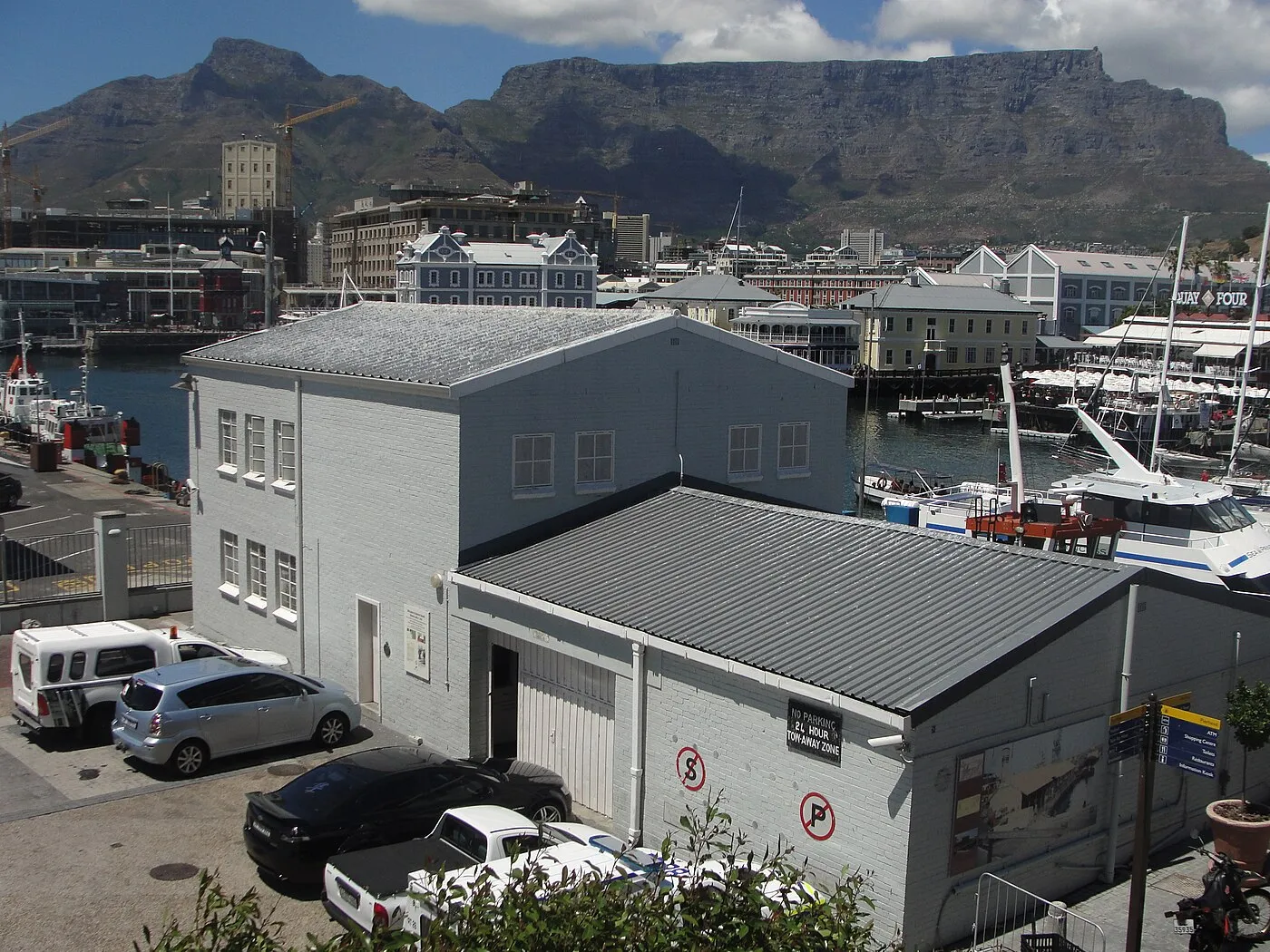
Everything starts at the Nelson Mandela Gateway beside the Clock Tower at the V&A Waterfront, where you check in and board. Ferries leave at 9 AM, 11 AM and 1 PM, with an extra 3 PM sailing added over the summer, and the whole outing runs about three and a half hours. That covers the 30-minute crossing each way, a roughly 45-minute bus tour of the island — Sobukwe's house, the lime quarry, the leper graveyard and the village — and a walking tour of the maximum-security prison led on foot by a former inmate. The first ferry of the day usually means the calmest sea and the smallest crowds.
How much does a Robben Island tour cost and where do you book?
A standard ticket bundling the return ferry and the guided tour is R600 ($33) for adults and R330 ($18) for children, booked through the official Robben Island Museum. Because a fixed number of seats sails each day, tickets routinely sell out two to four weeks ahead in peak season, so reserve online before you arrive rather than hoping for same-day space. Private Cape Town heritage tours that fold Robben Island into a wider itinerary run R3,000–5,000 ($165–275) and handle the booking and transfers for you.
Are Robben Island tours really led by former prisoners?
Yes — the prison walking tour is guided by men who were themselves held here as political prisoners under apartheid, which is what sets a visit apart from any other museum. They describe their own arrest, classification and daily routine, so the cellblocks and the quarry come with first-person testimony rather than a script. The island bus portion is usually led by a separate guide focused on the site's wider history, from its centuries as a place of banishment to its ecology today.
How much time does Robben Island take, and what else can you pair it with?
Set aside roughly half a day, from Waterfront check-in to your return, and treat it as a fixed block rather than something to squeeze between other plans — the ferry will not wait. It pairs naturally with the rest of Cape Town: the V&A Waterfront around the Gateway is worth an hour before or after, and many visitors keep a weather-dependent slot open for Table Mountain or a calmer morning at Kirstenbosch on a separate day.