
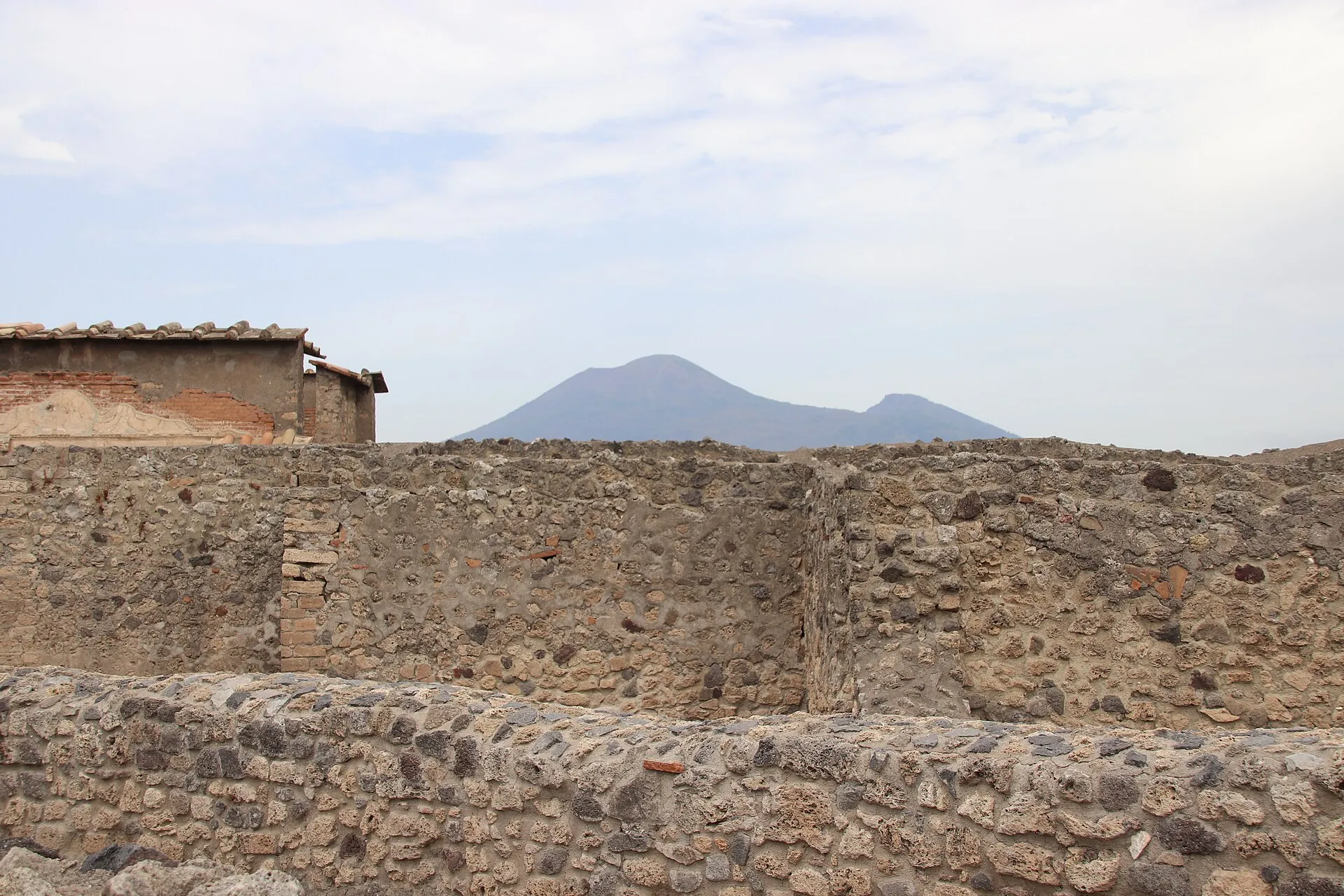
Key Artifacts
The Forum: the civic heart of Pompeii with temples, markets, and the basilica (law court). Villa of the Mysteries: remarkably preserved frescoes depicting Dionysian initiation rituals in vivid reds and greens. The Amphitheater: the oldest surviving Roman amphitheater (70 BC), seating 20,000 spectators. Thermopolia: ancient fast-food counters with preserved ceramic jars still containing traces of food. House of the Faun: one of the largest and most impressive private homes, with the famous Alexander Mosaic (original now in the Naples Archaeological Museum). Plaster casts: haunting forms of victims preserved by volcanic ash. The Lupanar: the infamous brothel with explicit frescoes serving as a menu of services.
Excavation History
Pompeii lay buried and forgotten for nearly 1,700 years until workers digging a canal accidentally struck ruins in 1748. Systematic excavations under the Bourbon kings of Naples progressively revealed a complete Roman city frozen in time. In the 19th century, archaeologist Giuseppe Fiorelli pioneered the technique of pouring plaster into voids left by decomposed bodies, creating the haunting casts that remain Pompeii's most emotionally powerful artifacts. Only about two-thirds of the city has been excavated; ongoing work continues to reveal new discoveries, including a recently uncovered thermopolium with intact food and painted decorations. The site's conservation remains a constant challenge as exposed ruins deteriorate faster than buried ones.
When to Visit
April-October: 9 AM - 7 PM (last entry 5:30 PM). November-March: 9 AM - 5 PM (last entry 3:30 PM). Closed: January 1, May 1, December 25. Best time: early morning to avoid heat and crowds.
Admission and Costs
Entry ticket: €18 (book online to skip ticket lines). Combined Pompeii plus Herculaneum: €24 (valid 3 days). Group guided tour: €40-60 per person (2-3 hours). Private guide: €200-350 for up to 6 people (2.5-3 hours).
The Case for a Guide
Pompeii is one of the most visited archaeological sites in the world, and it's also one of the easiest to do badly — a self-touring visitor wanders 66 hectares of ruins with minimal signage while the most revealing rooms, accurate eruption timeline, and social class distinctions remain entirely invisible without a guide.
- Restricted erotic frescoes room: The Lupanar brothel and several private villas contain explicit frescoes that are either locked or require context to interpret accurately; licensed guides have access protocols and can explain the scenes as commercial advertising, social status signaling, and evidence of Roman attitudes toward sexuality that challenge modern assumptions.
- 18-hour eruption timeline, not instant burial: Most visitors imagine instant entombment, but the eruption of August 24, 79 AD unfolded across 18 hours with a distinct pyroclastic surge killing most victims; a guide explains the two-phase eruption, why some residents evacuated successfully and others did not, and what the body positions in the plaster casts reveal about the specific moment of death.
- Plaster cast technique and body postures: Fiorelli's 1863 innovation of injecting plaster into the voids left by decomposed bodies created 86 surviving casts; a guide explains which casts are displayed where, what each posture suggests about the individual's final moments, and the ongoing debate about whether the technique could be improved using modern resin.
- The bakery with bread still in the oven: One thermopolium was found with carbonized bread loaves still in the stone oven, a detail most visitors walk past entirely; a guide locates this specific building, explains the Roman fast-food industry it represents, and identifies the amphora residue analysis that revealed the shop served a spiced wine sauce.
- Luxury vs. middle-class home distinctions: The difference between the House of the Faun (a wealthy merchant's 3,000-square-meter mansion with a private bathhouse) and a standard artisan dwelling is visible in floor materials, wall painting quality, and room count; a guide reads the social hierarchy of the entire city through its domestic architecture in a way no plaque conveys.
Tips for Visitors
Wear sturdy shoes: ancient cobblestones are uneven and slippery. Bring water: very little shade, especially in summer. Start early: morning visits beat both heat and cruise ship crowds. The site is 66 hectares -- overwhelming without expert direction to the best-preserved areas. Combine with the Naples Archaeological Museum where the best artifacts are displayed. Consider Herculaneum: smaller, better preserved, and less crowded.
Frequently Asked Questions
Which months are best for exploring Pompeii's ruins?
April, May, September, and October are the standout months, offering warm but tolerable temperatures for the hours of walking across the vast, largely shadeless archaeological site. Spring wildflowers growing among the ancient columns add unexpected beauty. July and August bring punishing heat that makes the exposed Roman streets exhausting, while shorter winter daylight hours from November through February limit how much of the 66-hectare site you can cover.
What are the opening hours for Pompeii Archaeological Park?
April - October: 9 AM - 7 PM (last entry 5:30 PM). November - March: 9 AM - 5 PM (last entry 3:30 PM). Closed: January 1, May 1, December 25. Best time: Early morning to avoid heat and crowds
What is the entrance fee for Pompeii Archaeological Park?
Entry ticket: €18 (book online to skip ticket lines). Combined Pompeii + Herculaneum: €24 (valid 3 days). Group guided tour: €40-60 per person (2-3 hours). Private guide: €200-350 for up to 6 people (2.5-3 hours)
What practical tips should visitors know before exploring Pompeii Archaeological Park?
Wear sturdy shoes: Ancient cobblestones are uneven and slippery. Bring water: Very little shade, especially in summer. Start early: Morning visits beat both heat and cruise ship crowds. Download maps: Cell service can be spotty inside the site.