Chicago in 3 Days: Architecture, Blues, and Deep-Dish Pizza
A complete 3-day Chicago itinerary covering the Chicago Riverwalk architecture tour, the Art Institute, Navy Pier, the blues clubs of Bronzeville, and practical tips for getting around one of America's most walkable cities.
Read the full guideUpdated · 10 min read
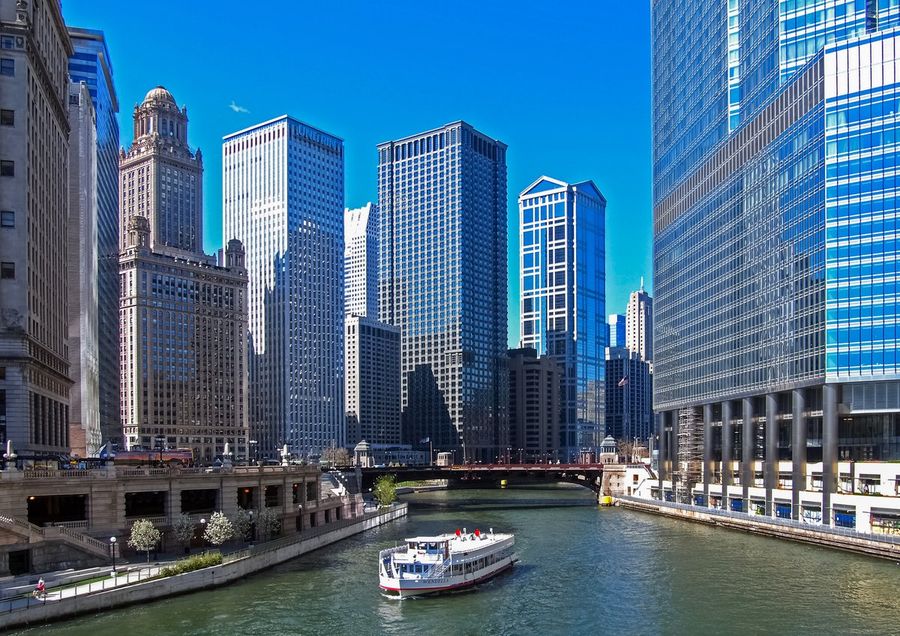
Three days in Chicago balance architecture, art, and music. Day one takes the Chicago River architecture boat tour, Millennium Park, and the Riverwalk; day two pairs the Art Institute with Bronzeville's Great Migration history and South Side blues clubs; day three covers Navy Pier, the Lakefront Trail, and Logan Square. The L and buses make it car-free.
Chicago makes an immediate impression. The moment you approach the city along Lake Shore Drive and the skyline rises in full — the John Hancock Center, Willis Tower, the blue glass façades of the river district — you understand why architectural historians consider this the city that invented the modern urban landscape. Chicago rebuilt from the 1871 Great Fire and in rebuilding it essentially created the skyscraper, the steel-frame building, and the modern American city grid. Three days barely scratches the surface, but it is enough to fall in love with the place.
How should you spend day one downtown?
Start day one on the water with the Chicago Architecture Center's 90-minute river cruise, the city's best introduction to its skyscrapers. Then walk Millennium Park for Cloud Gate and the Crown Fountain, stroll the Riverwalk to Lake Michigan, and finish with dinner along the West Loop's Randolph Street restaurant row.
Morning: Architecture Boat Tour
There is no better introduction to Chicago than an architecture boat tour on the Chicago River. The Chicago Architecture Center operates what are widely considered the definitive tours — 90-minute cruises that pass seventy buildings with expert commentary on why Chicago became the laboratory of modern architecture. The tour explains the evolution from the 1888 Rookery Building (Louis Sullivan and Dankmar Adler's structural innovations) through Mies van der Rohe's International Style to the postmodern and contemporary towers that define the current skyline.
Book the morning departure (typically 9 or 10 a.m.) to get the best light on the river facades. This is not a tourist cruise with incidental architecture commentary — it is architecture education delivered on water, and it is the single best activity in the city for first-time visitors.
Afternoon: Millennium Park and the Loop
Millennium Park is Chicago's contemporary public centrepiece, built over the rail yards that separated the downtown Loop from the lakefront. Cloud Gate (universally known as "The Bean") is the Anish Kapoor sculpture that has become the city's most iconic image — worth approaching for the disorienting reflective views of the skyline even if you've seen it a thousand times in photographs. The nearby Crown Fountain (two 50-foot glass block towers with changing video portraits of Chicago residents) is equally extraordinary and less photographed.
The Chicago Architecture Center has a permanent exhibition on the city's built environment at street level (Wabash Ave.) — worthwhile before or after the river tour for anyone seriously interested in the subject.
Walk the Chicago Riverwalk along the south bank of the river from Lake Street to Lake Michigan — a recently developed public promenade with restaurant terraces, kayak rentals, and unobstructed views of the bridges and towers above.
Evening: Dinner in the Loop or West Loop
The West Loop neighbourhood (10 minutes by taxi from Millennium Park) has become Chicago's most concentrated dining district. Randolph Street in particular ("Restaurant Row") hosts a progression of ambitious restaurants that represent the full range of contemporary American cooking. Reservations required for most mid-week, essential on weekends.
For a more historically embedded Chicago dinner, the Berghoff Restaurant on West Adams has been in continuous operation since 1898 and serves solid German-American cooking in a room full of Prohibition-era artifacts. Less fashionable; more genuinely Chicago.
How do you fill day two, from the Art Institute to the blues?
Day two opens at the Art Institute of Chicago, a top-five world museum strong in Impressionism; allow three to four hours. Cross to the South Side's Bronzeville, cultural heart of the Great Migration and the DuSable Black History Museum, then end the night with live music at Buddy Guy's Legends or Kingston Mines.
Morning: The Art Institute of Chicago
The Art Institute of Chicago is consistently ranked among the top five art museums in the world and requires serious planning to approach effectively. The permanent collection's strongest holdings are in French Impressionism and Post-Impressionism (Sunday Afternoon on the Island of La Grande Jatte, Nighthawks, American Gothic), but the museum also houses an outstanding collection of arms and armour, Japanese woodblock prints, and an extraordinary Thorne Miniature Rooms collection (sixty-eight rooms depicting European and American interiors in miniature) that most visitors walk past.
The Modern Wing, opened in 2009 and designed by Renzo Piano, connects to Millennium Park via the pedestrian BP Bridge and houses contemporary art in exceptionally well-lit galleries. Allow three to four hours minimum; a full day for anyone seriously engaged with the collection.
Book tickets online in advance (the Art Institute does not have day-of queues as severe as the major NYC institutions, but online booking skips the ticket counter).
Afternoon: Bronzeville and the Great Migration
The Bronzeville neighbourhood on the South Side is the cultural heartland of Chicago's African American community and one of the most historically significant urban neighbourhoods in the country. During the Great Migration (1910–1970), hundreds of thousands of Black Americans moved north from the rural South to Chicago's industrial economy; Bronzeville became the primary destination and evolved into the "Black Metropolis" — a self-sufficient cultural and commercial community with its own newspapers, music clubs, and national political influence.
The Bronzeville Walk of Fame (35th and King Drive) marks the contribution of 91 figures who shaped the neighbourhood's history. The DuSable Black History Museum and Education Center (the oldest institution in the country devoted to Black history and culture) provides deep context for the neighbourhood's significance.
Chicago Blues was born from this migration — the Mississippi Delta blues that migrated north and electrified in the clubs of Bronzeville. The Chicago Blues Experience (a museum experience near the Loop) gives historical context, but for the living tradition, the evening is for the South Side clubs.
Evening: Blues Clubs
Buddy Guy's Legends near the South Loop is the most famous Chicago blues club — owned by Buddy Guy himself, reliable in quality, and accessible to visitors without requiring deep familiarity with the local scene. The house bands are excellent and Guy himself appears without announcement several times a year.
For a more neighbourhood-embedded experience, Rosa's Lounge in Logan Square or Kingston Mines in Lincoln Park (two venues with multiple stages running simultaneously through the night) represent the club format where Chicago blues developed. Neither requires advance booking; cover charges are reasonable.
What should you see on day three along the lakefront?
Day three follows the lakefront. Take in the skyline view from Navy Pier, then cycle the Lakefront Trail south past the Museum Campus's Field Museum, Shedd Aquarium, and Adler Planetarium. Spend the afternoon among Logan Square's independent shops and restaurants, and close with an evening walk beneath the Loop's elevated L on Wabash Avenue.
Morning: Navy Pier and Lakefront Trail
Navy Pier is Chicago's busiest tourist attraction and divides local opinion sharply. The pier itself (a half-mile into Lake Michigan, built in 1916) has been redeveloped as a festival marketplace; the Centennial Wheel (Ferris wheel), the Chicago Children's Museum, and the Shakespeare Theater are the main draws. What is undeniable is the view back toward the Chicago skyline from the far end of the pier — one of the best urban skyline perspectives in the world.
The Chicago Lakefront Trail runs 18 miles along the Lake Michigan shoreline; cycling the central section from Navy Pier south to the Museum Campus is an excellent way to experience the city's relationship with its lake. Bike rentals are available through Divvy (Chicago's bike-share system) at multiple points along the route.
The Museum Campus at the south end of the trail clusters three major institutions: the Field Museum (natural history, with Sue the T. Rex), the Shedd Aquarium, and the Adler Planetarium. One institution per day is realistic; the Field Museum alone requires three to four hours if taken seriously.
Afternoon: Logan Square and Independent Chicago
Logan Square is the neighbourhood where Chicago's creative and culinary independent scene has concentrated over the past decade — the stretch of Milwaukee Avenue through the square has the density of independent bookshops, vinyl record stores, and adventurous restaurants that Chicago's accelerating gentrification has pushed outward from more central districts.
Longman & Eagle (a gastropub occupying a historic 1905 commercial building) and Lula Café are the neighbourhood's culinary anchors. The Logan Square Farmers Market runs Sunday mornings through the growing season and provides an accurate picture of Chicago's food culture beyond the downtown restaurants.
Evening: The Chicago Signature Walk
End your Chicago visit with an evening walk through the Loop — Chicago's central business district where the elevated rail (the "L") runs in a circuit around the financial core. At dusk, the steel-framed towers built on the grid Louis Sullivan and Daniel Burnham established illuminate against the darkening sky; the river reflects the Chase Tower and the Merchandise Mart; the L train rattles overhead through the urban canyon of Wabash Avenue.
Wabash Avenue at night specifically — the underside of the elevated structure, the mix of cast iron and glass storefronts, the particular quality of artificial light filtered through the rail structure — is quintessentially Chicago and not found in any other city.
What practical tips help in Chicago?
Chicago is easy without a car: the CTA runs the L and buses with a Ventra card, and downtown is highly walkable. Deep-dish pizza at Lou Malnati's or Giordano's needs 45 minutes to bake, so order on arrival. Budget $50–90 for dinner with drinks and $150–250 for mid-range hotels, and pack a jacket for lakefront wind.
Getting Around: The CTA (Chicago Transit Authority) operates the L and a comprehensive bus network. A Ventra card (transit card) provides access to both. The downtown Loop and many neighbourhoods are highly walkable; taxis and Uber are available throughout.
Chicago-Style Pizza: Deep-dish pizza is Chicago's most famous export and the subject of genuine debate. Lou Malnati's (multiple locations) and Giordano's are the major institutions; deep-dish requires 45 minutes to bake and is best ordered on arrival. Note that many Chicagoans eat thin-crust tavern-style pizza (cut in squares, not slices) for everyday dining; deep-dish is more of a special occasion meal.
Weather: Chicago's lakefront makes the wind a serious factor. Even in summer, bring a jacket for evening; spring and autumn evenings can be significantly colder than the afternoon temperature suggests.
Costs: Chicago is mid-range by major American city standards. A good dinner with drinks runs $50–90 per person; mid-range hotels average $150–250 per night.
Chicago rewards visitors who engage with its intellectual history — the city has genuine opinions about architecture, jazz, blues, politics, and food, and it expresses these opinions loudly. New York gets more attention; Chicago makes a convincing argument that it has been getting things right for longer.
Frequently Asked Questions
Is the Chicago Riverwalk architecture boat tour worth it?
Yes, it is widely regarded as the best introduction to the city. The river-level perspective and expert narration on the skyscrapers make it a highlight rather than a tourist trap.
How do I get around Chicago without a car?
The 'L' train and bus system covers the city well, including direct trains from both airports, and downtown is highly walkable. A Ventra card or contactless payment works across all transit.
When is the best time to visit Chicago?
Late spring through early autumn offers the warmest weather and the full festival calendar. Winters are bitterly cold and windy, though the holiday season is festive.
Where can I hear authentic Chicago blues?
Long-running clubs on the North Side and historic South Side venues offer nightly live blues. Check set times in advance, as the best acts often start later in the evening.