

Overview
Ancient Akrotiri, often called the "Pompeii of the Aegean," is a remarkably preserved Minoan Bronze Age settlement buried by a massive volcanic eruption around 1600 BC. The ash that destroyed the city also preserved it perfectly for 3,600 years. Excavations reveal multi-story buildings, advanced plumbing, vibrant frescoes, and sophisticated urban planning -- offering an unprecedented window into Bronze Age Aegean civilization. The site sits on Santorini's southern tip, within easy reach of Oia and the spectacular Caldera trail.
The site was first excavated by Greek archaeologist Spyridon Marinatos in 1967. Unlike Pompeii, no human remains or valuable items were found -- suggesting inhabitants had warning and evacuated before the eruption. The ash preserved organic materials, giving archaeologists unprecedented insights into Bronze Age daily life. The settlement was highly advanced for 1600 BC, with sophisticated architecture, art, and urban planning rivaling contemporary civilizations.
Excavation History
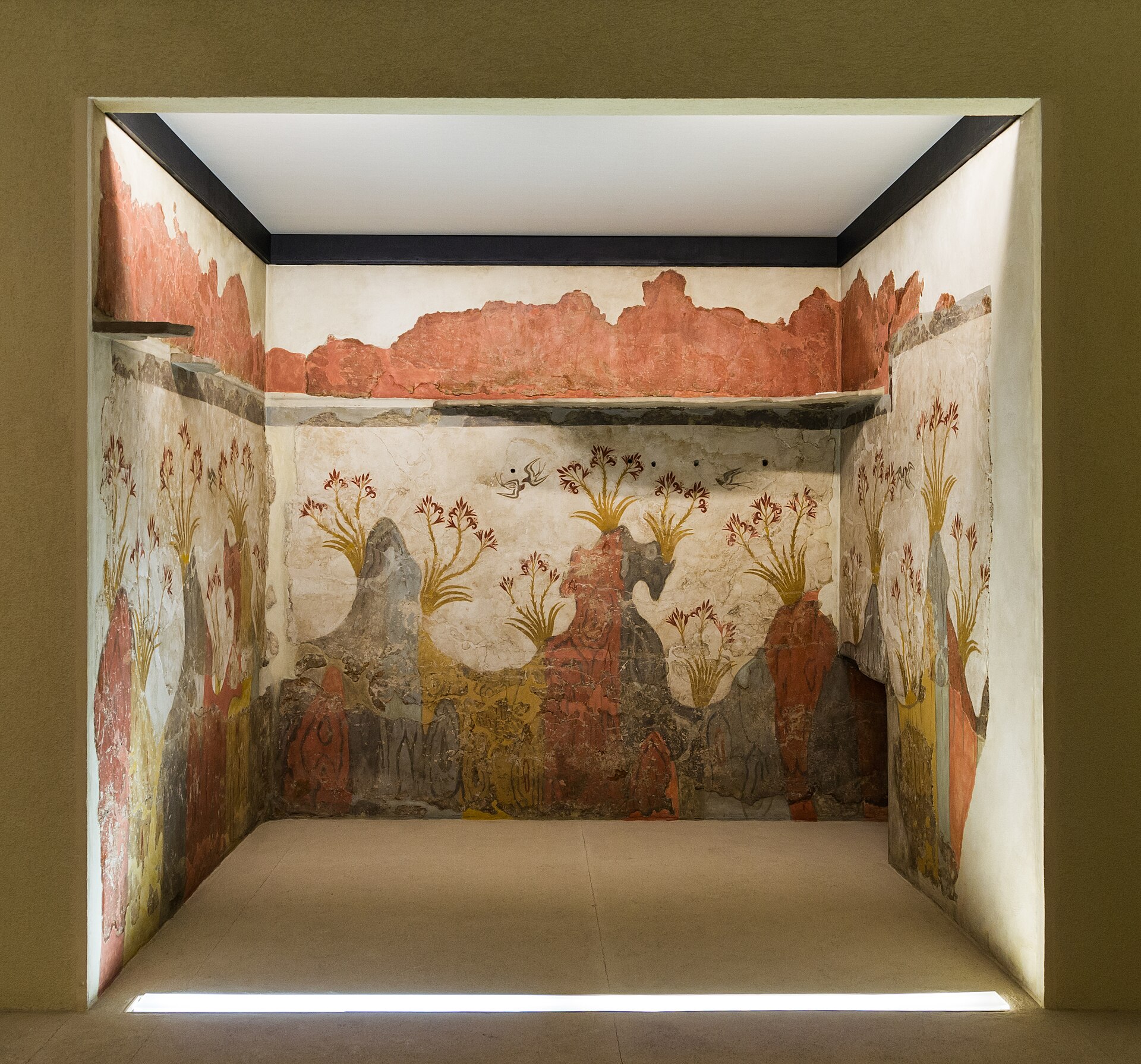
Multi-story buildings -- 2-3 story houses with sophisticated architecture. Advanced plumbing -- clay pipes, drainage systems, sophisticated sanitation. Storage vessels -- giant pithoi (ceramic jars) for grain, olive oil, wine. Fresco locations -- where the famous "Boxing Boys" and "Spring Fresco" were found. Windows and doors -- wooden features perfectly preserved as ash impressions. Paved streets -- stone-paved roads showing urban planning sophistication. Protective roof structure -- modern bioclimatic shelter protecting excavations. Information panels -- recent updates with QR codes for additional context.
Key Artifacts
Multi-story buildings rise 2-3 stories with sophisticated Minoan architecture. Advanced plumbing systems include clay pipes, drainage, and sanitation rivaling some modern standards. Giant pithoi (ceramic storage jars) held grain, olive oil, and wine. The famous "Boxing Boys" and "Spring Fresco" frescoes were found here (originals now in Athens' National Archaeological Museum). Wooden features are perfectly preserved as ash impressions. Stone-paved roads demonstrate urban planning sophistication. A modern bioclimatic shelter protects the excavations, with information panels and QR codes for additional context.
When to Visit
Hours: Wednesday-Monday 8 AM-8 PM (summer) | 8:30 AM-3 PM (winter). Closed: Tuesdays year-round. Best time: Morning opening (8 AM) -- cooler temperatures, fewer tour groups, and better light for photography inside the covered site. Least crowded: Weekday afternoons in winter (but note the shorter hours). Allow 1.5-2 hours for a thorough exploration with a knowledgeable guide.
Admission and Costs
Admission: €12 adults | €6 reduced (students, seniors 65+). Free entry: under 18, archaeology students, March 25, October 28. Audio guide: not available -- guidebook €5. Group guided tours: €40-60 per person (expert archaeologist, 2 hours). Private guide: €180-280 for up to 6 people (does not include tickets). Half-day island tours: €60-90 per person (Akrotiri plus Red Beach plus winery). Archaeological expertise: understand excavation techniques, preservation challenges, and ongoing research. Minoan civilization: context about this sophisticated Bronze Age culture. Volcanic eruption story: how the disaster unfolded, why no bodies were found. Fresco interpretation: explain symbolism in the stunning wall paintings (originals in Athens museum). Atlantis connection: credible theories linking Akrotiri's destruction to Plato's legend.
Tips for Visitors
Visit early: morning light is better for photography inside the covered site. See the original frescoes at Athens' National Archaeological Museum before or after your Santorini trip for full context. Wear layers: the protected site can be cool even in summer. Photography is allowed (no flash, no tripods, personal use only). Comfortable shoes are needed for elevated walkways and stairs over a 1-2 hour walking tour. Combine with Red Beach (5-minute drive) and nearby villages. A small cafe outside the entrance offers refreshments after the tour. Accessibility is limited due to elevated walkways and stairs.