
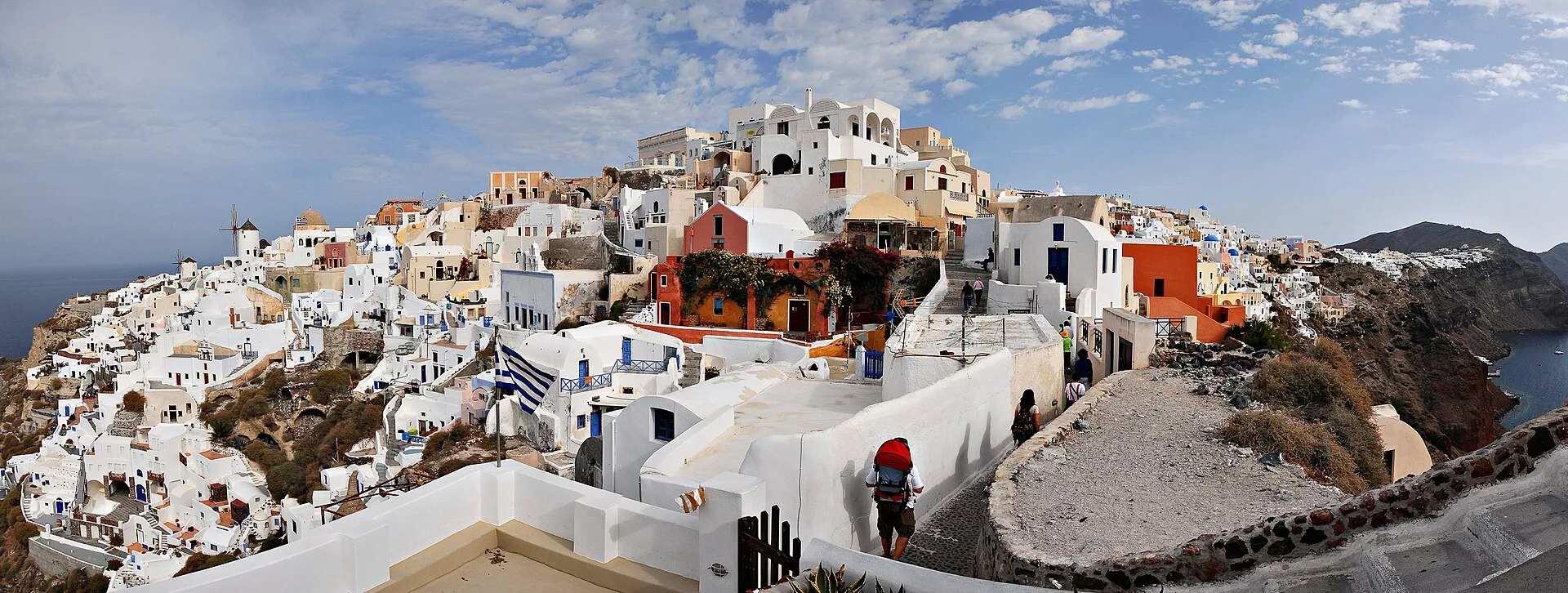
Walking Routes
Start at the bus station and walk the marble-paved main street past jewelry shops, ceramics studios, and local crafts. Detour to the three iconic blue domes -- guides know the exact locations that are easy to miss. Continue to the Byzantine castle ruins, the classic sunset spot (arrive 90 minutes early in summer). Descend the 300 steps to Ammoudi Bay for waterfront tavernas and swimming. Loop back up past cave houses -- traditional captain's houses carved into the volcanic cliffs. Stop at Panagia Platsani, a 19th-century church with a blue dome. The full walking route takes 2-3 hours at a relaxed pace.
Local Life
Art galleries line the main street, showcasing local artists with Cycladic-inspired works alongside international pieces. Morning cafes offer quiet breakfast spots before tourist crowds arrive. Ammoudi Bay, 300 steps below the village, is where locals swim and dine on fresh seafood at waterfront tavernas. The sunset applause tradition -- clapping when the sun dips below the horizon -- unites visitors nightly at the castle ruins. Cave houses, once modest fishermen's dwellings, have been transformed into luxury boutique hotels carved directly into the volcanic cliff face.
When to Visit
Sunset time varies by season: June-August around 8:15 PM, winter around 5:15 PM. Arrive 2 hours before sunset to explore the village and secure good spots. Morning magic: 8-10 AM for empty streets, soft light, no crowds, and ideal photos. Weekdays are slightly less crowded than weekends (but still very busy in summer). Avoid cruise ship days (Wednesday and Saturday are often the busiest), and peak July-August is shoulder-to-shoulder.
Admission and Costs
Village access: free to walk around and explore. Sunset spots: free (castle ruins, marble steps) but arrive very early. Restaurant reservations: €50-150 per person (dinner with caldera view). Group sunset tours: €40-60 per person (guide plus sunset viewing strategy). Private photography guide: €150-250 for 2 hours (best spots, timing, techniques). Private guided tour: €200-300 for up to 4 people (village history plus sunset).
The Case for a Guide
Oia is photogenic for everyone, but a guide provides the volcanic, historical, and social context that transforms a beautiful village into a place with a genuinely extraordinary backstory — including a sunset experience most tourists inadvertently ruin for themselves.
- Minoan eruption context: The Santorini caldera was created by one of the largest volcanic eruptions in human history, around 1600 BC; a guide explains how the resulting tsunami and ash cloud likely ended Minoan civilization on Crete, and points out that Oia sits on the rim of what was once a complete island.
- Sunset crowd reality and better alternatives: The castle ruins at sunset attract hundreds of people with tripods jostling for the same angle; a guide identifies the specific terrace viewpoints 200 meters north and south that offer the identical sun-meets-caldera composition with a fraction of the crowd.
- Caldera depth and scale: The submerged caldera reaches 400 meters deep and spans 12 kilometers; standing at the rim with a guide who translates these numbers into comprehensible comparisons makes the view genuinely vertiginous rather than merely scenic.
- White paint tradition's practical origin: The whitewash is not simply aesthetic — it reflects intense summer heat and was mandated by the Greek government after the 1956 earthquake as a condition of reconstruction subsidies; a guide explains why different villages on the island have different color schemes and what that reveals about who paid for post-earthquake rebuilding.
- Cave house architecture and living conditions: The yposkafa cave houses carved into volcanic rock maintain a naturally constant 18°C temperature year-round; a guide explains how fishermen's families lived in these structures for centuries before they became boutique hotels, and identifies original 18th-century elements still visible in the walls.
Tips for Visitors
Parking is nearly impossible in summer -- arrive by bus, taxi, or tour. Wear comfortable shoes for uneven marble stairs and lots of walking (no cars in the village). Bring layers: the breezy cliffside location is cooler after sunset. Book caldera-view restaurant tables weeks ahead for sunset dinner. Photography etiquette: respect residents, as these are real homes, not film sets. Stay for the stars: after the sunset crowds leave, the village transforms with romantic ambiance. Alternative sunsets with fewer people: Fira, Imerovigli, or the lighthouse at the island's south end near Ancient Akrotiri.
Frequently Asked Questions
What months are best for visiting Oia in Santorini?
Late April through June and September through mid-October strike the perfect balance of warm caldera sunsets, open restaurants, and crowds that are busy but not overwhelming. July and August pack the castle ruins shoulder-to-shoulder for sunset, and accommodation prices double. March and November bring peaceful empty streets but many shops and restaurants close for the season.
What time of day is best for exploring Oia?
Sunset varies by season - June-August around 8:15 PM, winter around 5:15 PM. Arrive 2 hours before sunset to explore and secure good spots. Morning (8-10 AM) offers empty streets and soft light, ideal for photos.
How much should visitors budget for Oia?
Village access: Free to walk around and explore. Sunset spots: Free (castle ruins, marble steps) but arrive very early. Restaurant reservations: €50-150 per person (dinner with caldera view).
Is a walking tour of Oia worth it?
Beat the crowds: Guides know secret spots locals use, avoiding main castle crush. Photography expertise: Best angles, timing, composition for that perfect shot. Village history: Stories of pirates, earthquakes, traditional maritime culture.