
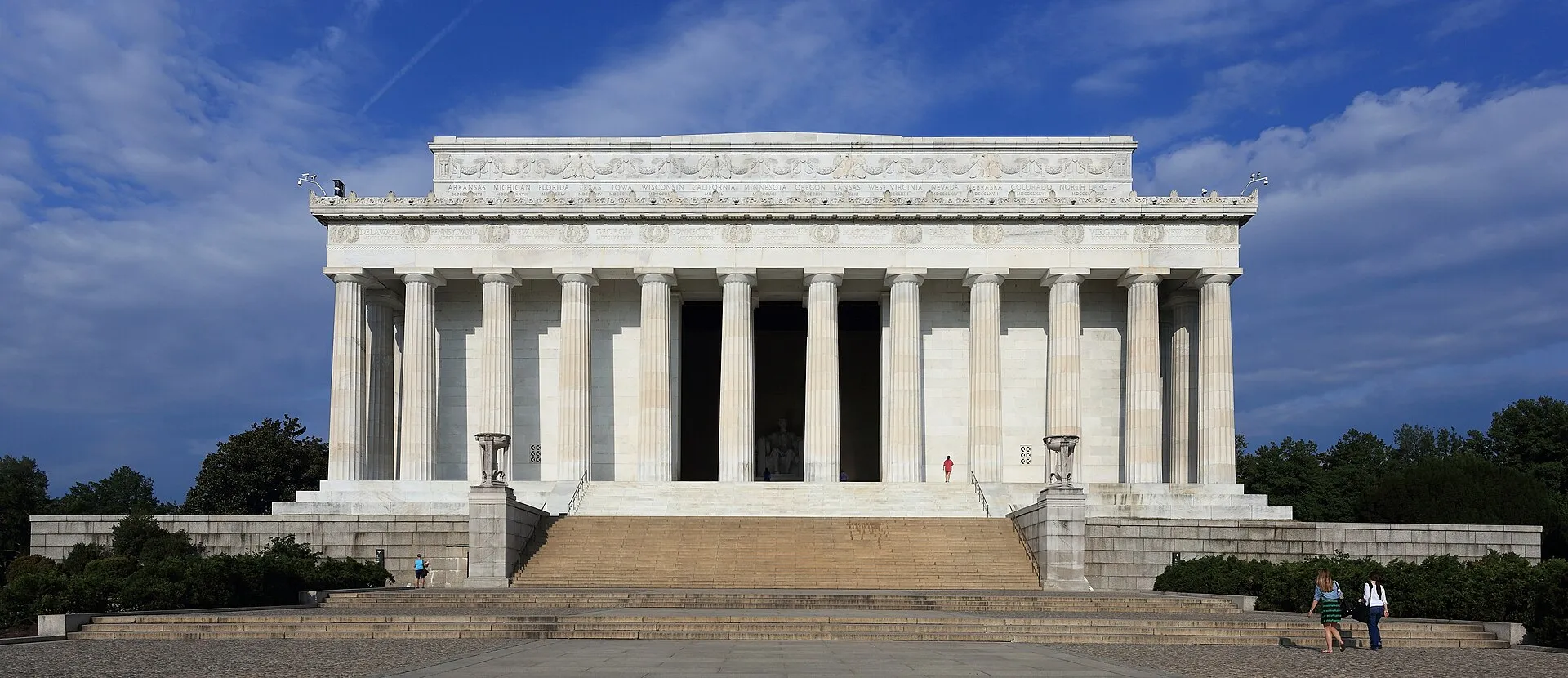
Lincoln Memorial timeline
-
Memorial commission formed
Congress created the Lincoln Memorial Commission and chose the boggy western end of the Mall over rival sites.
-
Ground broken on Lincoln's birthday
Construction began on 12 February 1914 on reclaimed marshland dredged from the Potomac flats.
-
Seated statue installed
The Piccirilli brothers assembled Daniel Chester French's 28-block marble Lincoln inside the finished chamber.
-
Memorial dedicated
Chief Justice William Howard Taft handed the temple to the nation on 30 May 1922, with Robert Todd Lincoln looking on.
-
Marian Anderson sings
Barred from Constitution Hall, the contralto performed for 75,000 on the steps on Easter Sunday.
-
"I Have a Dream"
Martin Luther King Jr. closed the March on Washington from the landing before roughly 250,000 people.
-
Listed on the National Register
The memorial gained formal historic protection as an anchor of the National Mall corridor.
-
Speech spot inscribed
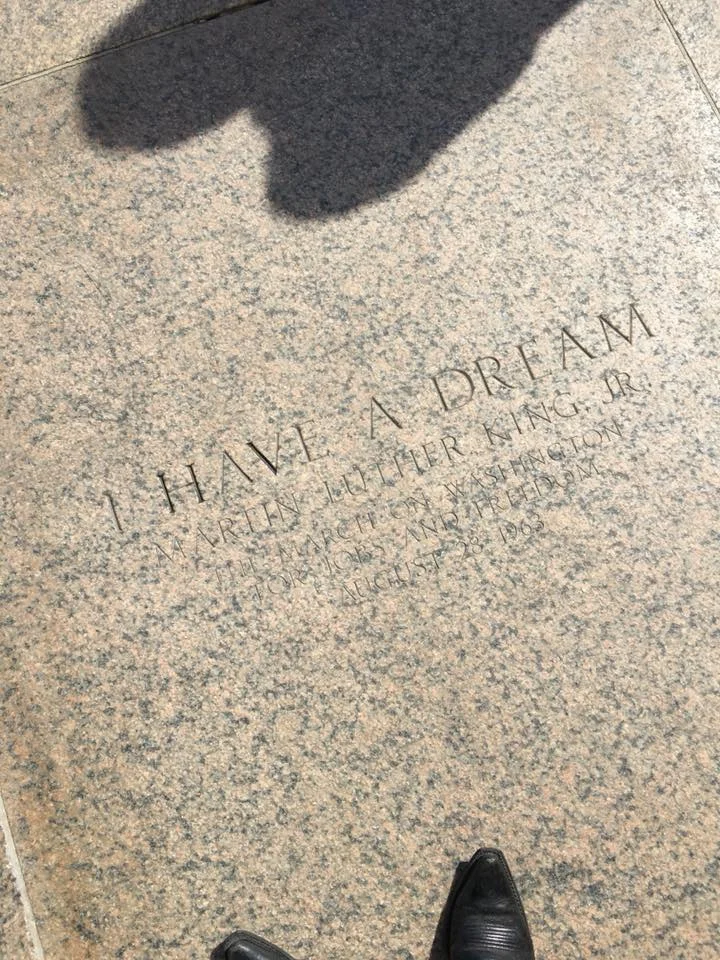
An engraving was cut into the landing marking the exact step where King stood in 1963.
Historical Significance
The Lincoln Memorial's meaning has never stood still. It was conceived as a tribute to the president who held the union together, but from its earliest years it became the nation's foremost stage for the unfinished work of equality. The Second Inaugural Address on the north wall still frames that mission in Lincoln's own words:
With malice toward none, with charity for all, with firmness in the right as God gives us to see the right, let us strive on to finish the work we are in.
On Easter Sunday 1939, the contralto Marian Anderson sang from these steps to a crowd of some 75,000 after the Daughters of the American Revolution barred her from Constitution Hall — a moment that turned the memorial into a symbol of dignity in the face of segregation. Just under a quarter-century later, on 28 August 1963, Martin Luther King Jr. closed the March on Washington from the landing with his "I Have a Dream" speech, addressing roughly 250,000 people stretched the full length of the Reflecting Pool. Vietnam-era demonstrators later gathered here by the hundreds of thousands, cementing the steps as the place Americans come to be heard.
Guides carry those layered stories forward and connect them to the ground around you. From this landing you can trace the sightline east to the US Capitol and west across Memorial Bridge to Arlington National Cemetery, a deliberate alignment reuniting North and South. The Vietnam Veterans Memorial and Korean War Veterans Memorial just steps away gain deeper resonance approached through this lens of American memory.
Architecture
Henry Bacon designed the memorial as a Greek Doric temple, its 36 exterior columns — each roughly 44 feet tall and carved from Colorado Yule marble — representing the states of the union at Lincoln's death in 1865, with every state's name inscribed above its column. The attic frieze crowning the colonnade lists the 48 states that existed when the memorial was dedicated in 1922, so the building quietly records the nation's growth between Lincoln's death and his monument.
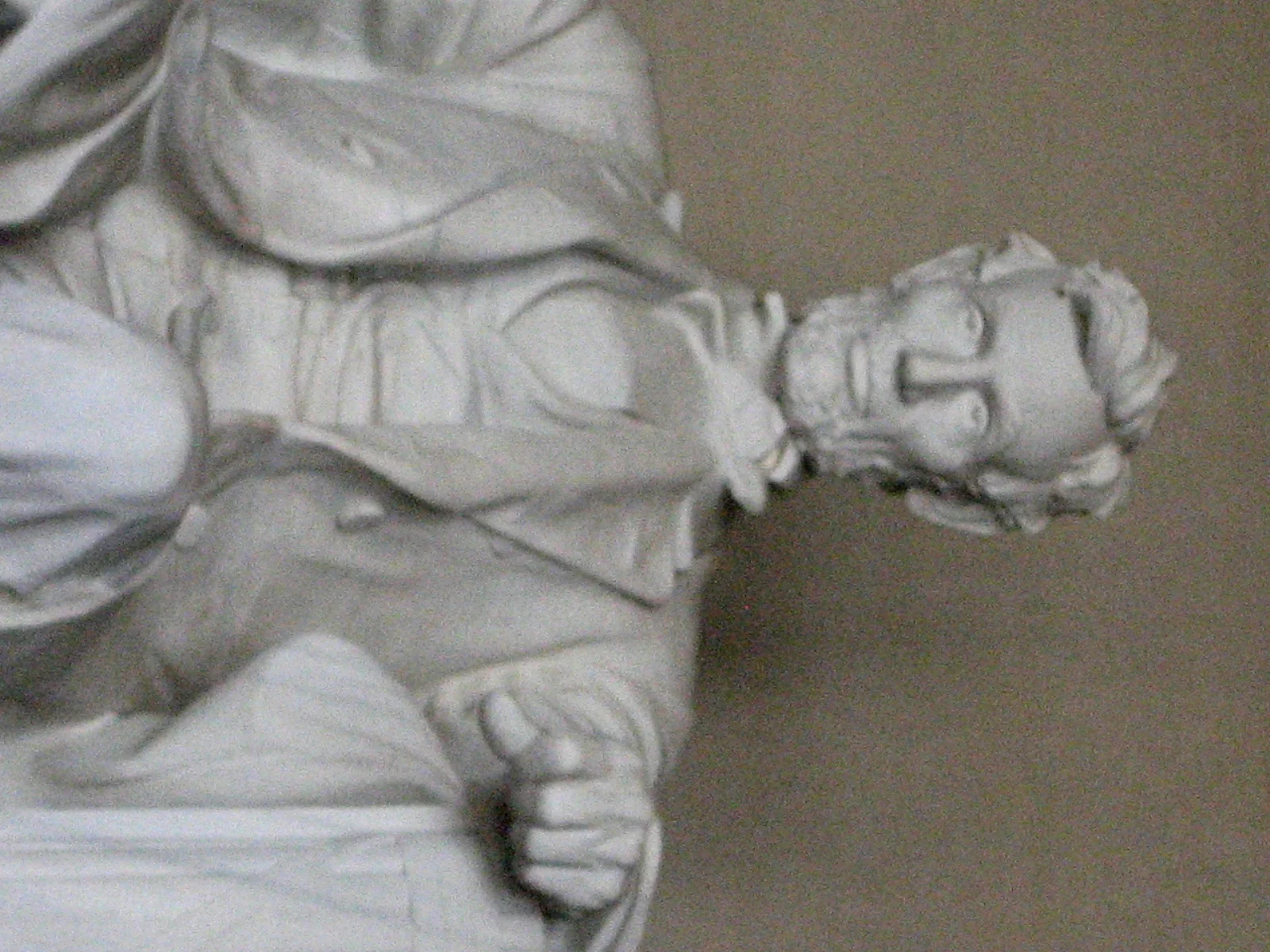
The seated Lincoln, 19 feet tall and just as wide, was carved from 28 blocks of white Georgia marble by the Piccirilli brothers, Italian-born stone carvers working from Daniel Chester French's plaster model; were the figure to stand, it would rise nearly 28 feet. Lincoln faces east down the Reflecting Pool toward the Capitol, forever watching over the union he preserved. Inside, murals by Jules Guerin span the upper walls with allegorical scenes of Emancipation and Reunion above the inscribed addresses, their colors muted by the dim, cathedral-like light that makes the chamber feel like a sanctuary.
Look closely at the north wall and you will find the memorial's most famous flaw: in the Second Inaugural Address, a carver first cut EUTURE for FUTURE, then filled and recut the errant stroke so a faint seam still marks the correction — a rare, human blemish in an otherwise flawless temple, and one of the best close-up photo details on the site.
Lincoln Memorial in Pictures
When to Visit
The memorial is open 24 hours a day, 365 days a year, and admission is always free. Park rangers staff the chamber from 9:30 AM to 10:00 PM daily and give free interpretive talks roughly every 30 minutes, explaining the architecture, the inscriptions, and the civil-rights history layered into the steps.
The best windows are the quiet ones:
- Sunrise floods the east-facing columns with golden light and turns the Reflecting Pool into a flawless mirror before any wind ripples it.
- After dark the marble is dramatically floodlit, the crowds thin, and the seated Lincoln takes on its most solemn presence — many guides argue this is the single most powerful moment to arrive.
- Avoid roughly 10:00 AM to 3:00 PM on summer days and holiday weekends, when tour groups pack the chamber and the treeless walk along the pool offers little shade.
Because the site never closes, it slots easily onto either end of a National Mall itinerary — dawn here before the museums open, or a floodlit finale after dinner.
Admission and Costs
Everything at the memorial itself is free:
- Entry: Completely free, with no tickets or reservations needed at any hour.
- Ranger programs: Free interpretive talks throughout the staffed day.
Guided experiences that include the memorial are where costs appear:
- Group walking tours: $30-55 per person for 2-3 hour monument walks that treat the Lincoln Memorial as a highlight.
- Private guide: $200-350 for a focused 2-hour tour of the memorial and the Mall's western end.
- Self-guided audio apps: $5-10 for narrated tours you follow at your own pace.
Because the western memorials cluster together, a single guided walk usually folds in the Vietnam Veterans, Korean War, and World War II memorials at no extra cost.
The Case for a Guide
The Lincoln Memorial is free, open 24 hours, and familiar from photographs — yet most visitors miss its deliberate architectural tricks, its inscription errors, and the specific spot where one of history's most consequential speeches was delivered.
- Why Lincoln looks down at visitors: Daniel Chester French deliberately designed the 19-foot figure at a scale that requires visitors to look up, creating a psychological relationship of humility before Lincoln's authority; guides explain how French adjusted the head and shoulders so the eyes read as meeting yours as you climb the steps — an effect that vanishes in photographs.
- The corrected FUTURE inscription: On the north wall, within the Second Inaugural Address, a stonemason carved EUTURE instead of FUTURE and repaired it by filling the mistaken stroke, leaving a faint visible seam; guides point it out and explain why the panel was patched rather than recut entirely.
- Acoustics that made the speech carry: The chamber's marble and its position at the head of the Reflecting Pool create unusual acoustic properties; guides explain how a crowd of 250,000 heard King on 28 August 1963, and lead you to the marked step — inscribed in 2003 — where he stood when he set aside his prepared remarks.
- The hidden undercroft below the statue: A cavernous basement beneath the chamber holds stalactites formed as rainwater seeped through the marble during the long construction; guides describe how these cave-like formations grew in only a few decades and what the space reveals about the memorial's marshland foundations.
- Position on the National Mall sightline: Henry Bacon chose the western terminus so the eye runs unbroken from the US Capitol through the Washington Monument to Lincoln; guides demonstrate the alignment from the top step and explain how the 1901 McMillan Plan staged the National Mall as a sequence of democratic symbols.
Tips for Visitors
Start or end here: The memorial works beautifully as either the opening or the climax of a National Mall walk, and because it never closes you can bookend a full day with a dawn arrival and a floodlit return.
Best photo opportunities:
- From the top step at sunrise, shoot east down the Reflecting Pool to catch Lincoln's mirrored axis toward the Washington Monument.
- Step inside at an angle to frame the seated statue between two columns rather than head-on — the off-center composition conveys the scale better.
- After dark, the floodlit east facade from across the pool is Washington's signature night shot.
- For a detail frame, find the corrected EUTURE / FUTURE seam on the north wall.
Getting there and around: Foggy Bottom–GWU (Orange/Blue/Silver lines) is the closest Metro stop, about a 15-minute walk. An elevator on the north side serves visitors who cannot climb the 87 steps, and restrooms sit on the lower level accessible from either side.
Combine visits: The Korean War Veterans Memorial, Vietnam Veterans Memorial, and — across Memorial Bridge — Arlington National Cemetery are all within an easy walk, and the Smithsonian Museums lie further east along the Mall. Note that eating and drinking are not permitted inside the memorial chamber.
Frequently Asked Questions
When is the best season to visit the Lincoln Memorial?
Late March through May aligns with Washington's cherry blossom season and delivers mild temperatures ideal for the long walk along the Reflecting Pool. October brings crisp autumn air, spectacular foliage framing the memorial, and noticeably thinner crowds than the peak spring and summer months. The memorial is open 24 hours year-round, and a nighttime winter visit, when the marble glows under floodlights with almost no one around, can be the most powerful experience of all.
When can visitors tour Lincoln Memorial?
The memorial is open 24 hours a day, 365 days a year. Park rangers staff the site from 9:30 AM to 10:00 PM daily with free interpretive talks every 30 minutes. Best time: Sunrise for golden light through the columns, or after dark when the memorial is dramatically illuminated with far fewer visitors.
How much is the entrance fee for Lincoln Memorial?
Entry: Completely free, no tickets or reservations needed at any time. Ranger programs: Free, offered throughout the day during staffed hours. Guided National Mall tours: $30-55 per person. Private guide: $200-350 for a focused tour.
Where exactly did Martin Luther King Jr. stand for the "I Have a Dream" speech?
King spoke from the landing about eighteen steps below the chamber, not from beside the statue. In 2003 the National Park Service cut a simple engraving into that step — reading I HAVE A DREAM and the date, 28 August 1963 — so visitors can stand precisely where he abandoned his prepared text and improvised the speech's most famous passage. Guides walk you to the spot and describe the view he had east across a crowd of roughly 250,000 filling the length of the Reflecting Pool.
What hidden details does a guide reveal at the Lincoln Memorial?
Guides reveal details most visitors miss: Lincoln's hands positioned in American Sign Language for A and L, the undercroft beneath the memorial with its stalactites formed during construction, the corrected FUTURE misspelling on the north wall, the symbolism of the 36 Doric columns representing the states at Lincoln's death, and the exact spot where Martin Luther King Jr. delivered his 'I Have a Dream' speech in 1963.