
Landmarks Along
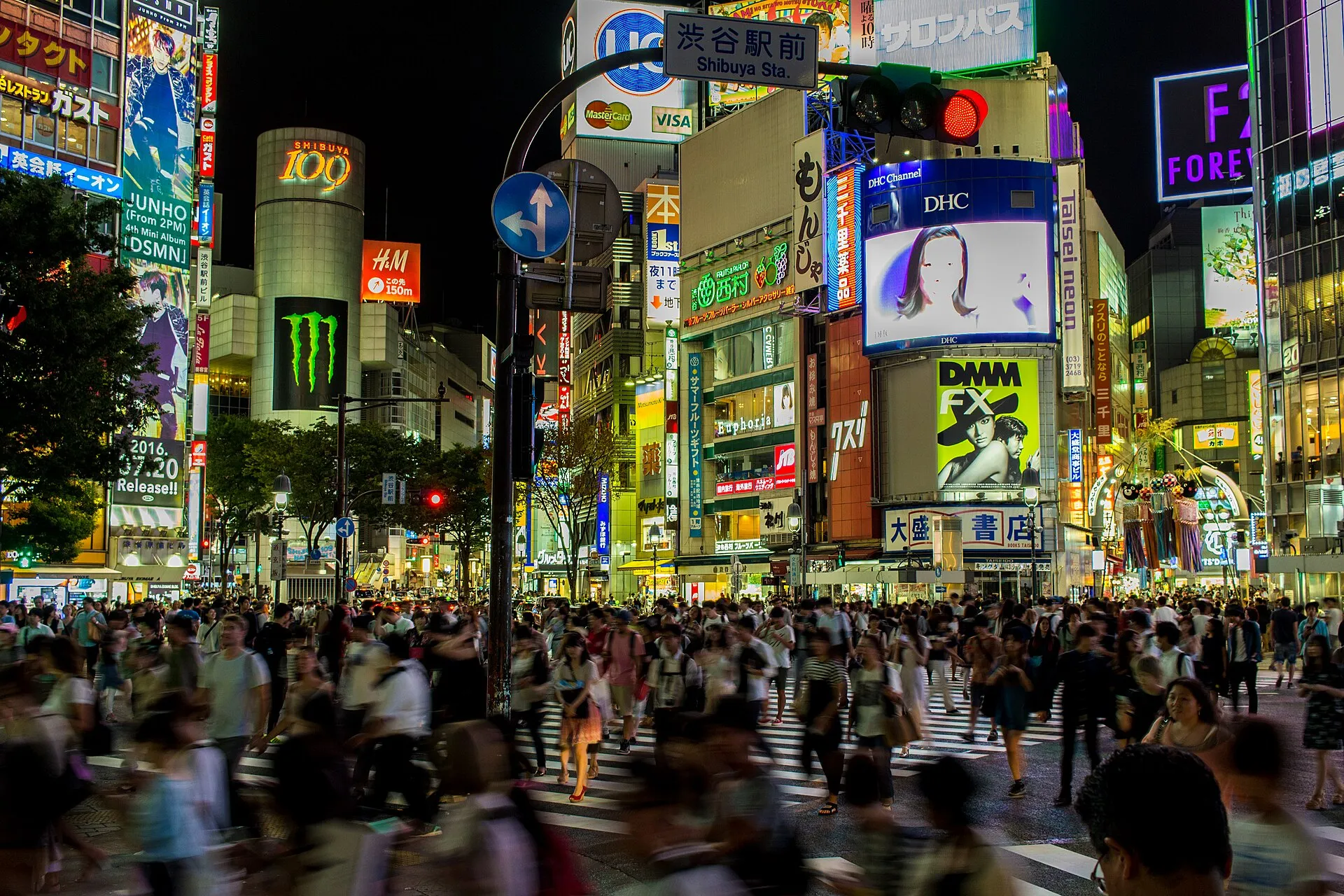
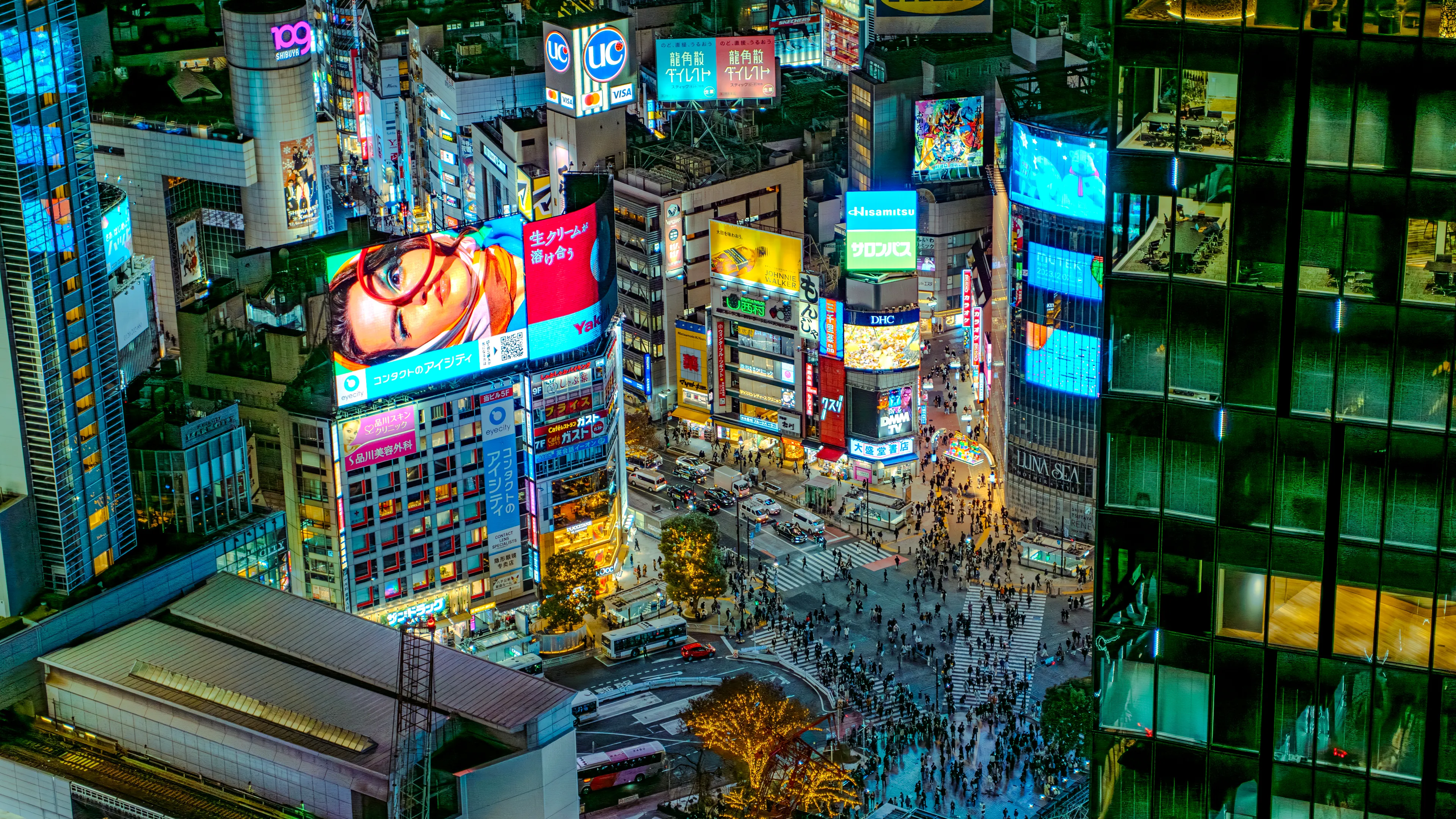
The scramble itself is the headline act: step off any corner when the lights change and move with thousands of strangers in a crossing that somehow never collides. At the station's north-west exit stands the bronze Hachikō statue, Tokyo's most-used meeting point — the current figure was recast in 1948 after the wartime original was melted down for its metal. Overhead, giant LED screens on the QFront, 109, and Tsutaya buildings turn the junction into a canyon of advertising that is most dramatic after dark. For height, the Shibuya Sky deck on Shibuya Scramble Square looks straight down on the crossing from about 230 meters, while the cylindrical Shibuya 109 fashion building and stores such as Tokyu Hands anchor the neighbourhood's reputation as Tokyo's youth-culture epicentre.
Photo Spots
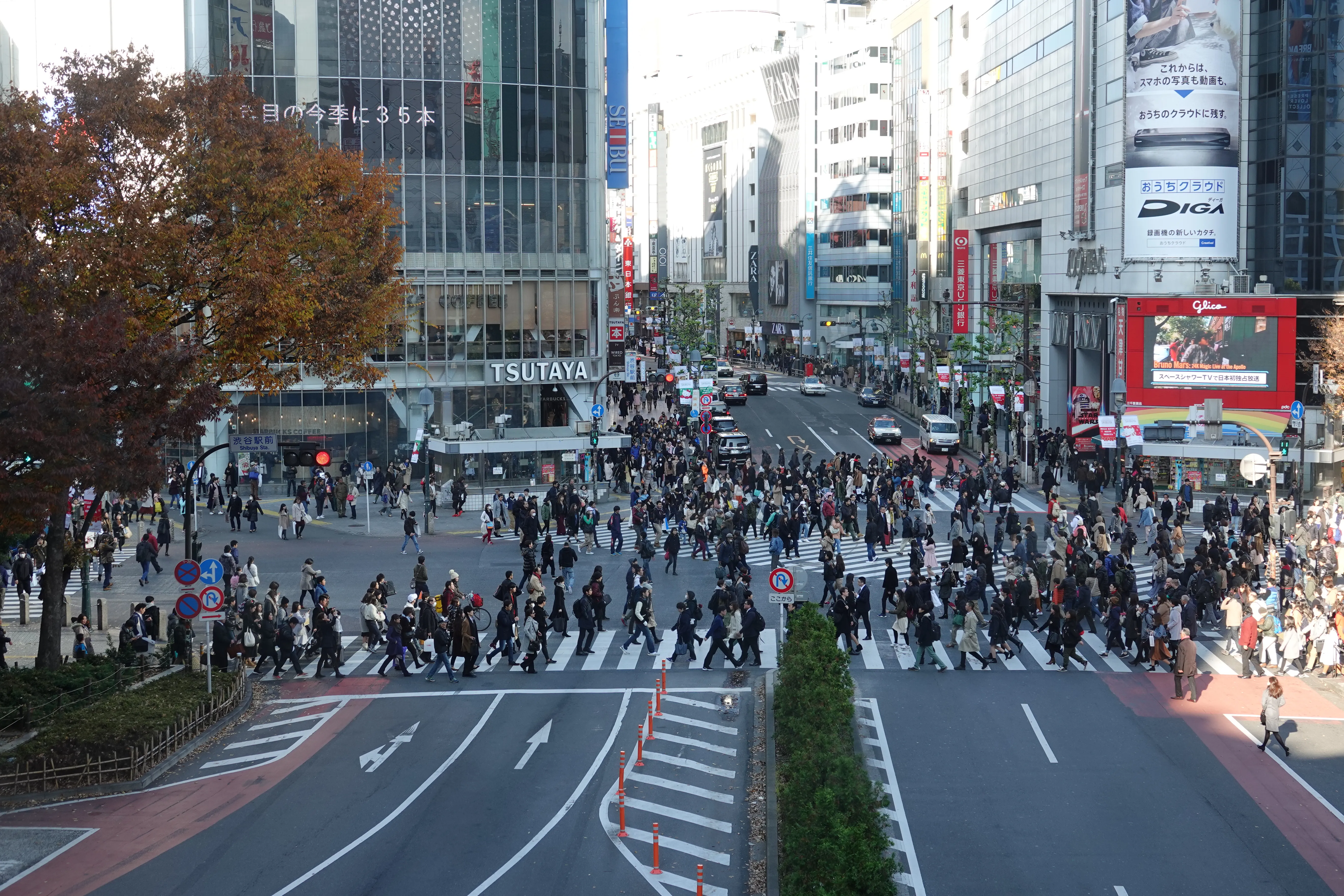
Work the crossing from three heights. At street level, step into the surge and shoot from the middle of the intersection as the waves converge, then move to a corner for the classic head-on wall of people. From above, the second-floor Starbucks window and the Shibuya Sky rooftop give the familiar bird's-eye geometry, with the free MAG's PARK roof on MAGNET by Shibuya109 as an uncrowded alternative. For a sense of scale, start at the bronze Hachikō, the meeting spot where the Akita has stood since 1934, and frame the scramble behind it. Night plus a slow shutter rewards patience: a time-lapse of up to 3,000 pedestrians flooding and clearing the junction every two minutes is the shot that defines the place.
Shibuya Crossing in Pictures
When to Visit
The crossing is open-air and free to walk 24 hours a day, year-round, with the scramble light cycle running roughly every two minutes, so there is always another wave to catch. Crowds peak on Friday and Saturday evenings between 7 and 9 PM, when the full 3,000-person surge is most reliable. Dusk is the sweet spot for photographs, pairing lit screens with a little daylight; for a near-empty intersection, come before 9 AM on a weekday, when commuters replace tourists.
Admission and Costs
Crossing the scramble costs nothing — it is a public intersection. The classic elevated view from the second-floor Starbucks in the QFront building is yours with any drink (roughly ¥500–700 (about $4)). For a paid aerial perspective, the Shibuya Sky rooftop deck atop Shibuya Scramble Square runs about ¥2,500 ($17) booked online. Surrounding department stores and Shibuya 109 are free to browse, so spending beyond transport is entirely optional.
The Case for a Guide
Shibuya Crossing is free and impossible to miss, but a guide transforms what appears to be organized pedestrian chaos into a window on Tokyo's traffic engineering philosophy, postwar reinvention, and youth culture geography.
- Scramble traffic engineering: The simultaneous all-way crossing was a deliberate design choice — a guide explains how traffic engineers calculated that stopping all vehicle movement at once actually moves more pedestrians per hour than sequential crossings, and why Tokyo adopted it here first
- Best elevated viewing positions locals know: The famous Starbucks fills instantly, but a guide knows which floors of nearby buildings offer clear sightlines without queuing — including the Scramble Square observation lobby and angles from Mag's Park that avoid the tourist clusters
- Filming spot access: Several music videos and films have used specific windows overlooking the crossing — a guide identifies which buildings and floors were used and how to replicate the exact framing
- Shibuya as youth culture center: The neighborhood's identity as Tokyo's epicenter of youth fashion and music developed specifically in the 1990s — a guide explains how gyaru fashion, City Pop record stores, and CD shops in a three-block radius created a cultural gravity still pulling today
- Peak vs. quiet crossing times: Friday evenings at 7-9 PM see the maximum 3,000-person crossings; early Tuesday mornings show the crossing nearly empty, with office workers instead of crowds — a guide times your visit to match what you actually want to experience
Tips for Visitors
The second-floor Starbucks in the QFront building frames the postcard view straight down the scramble, but window seats vanish within minutes of the morning opening — arrive early or plan to shoot standing. For a free, less-crowded angle, head to MAG's PARK, the open rooftop of the MAGNET by Shibuya109 building directly facing the crossing. Because the signal cycles about every two minutes, you get repeated chances to photograph or simply stand in the middle of the flow. Visit on a Friday evening for the densest surge, when up to 3,000 people cross in one go, or a weekday morning for room to breathe.
Frequently Asked Questions
When is the best time to walk through Shibuya Crossing?
The crossing is open 24 hours a day, every day of the year, and the lights cycle about every two minutes, so there is always another wave to join. It is busiest on Friday and Saturday evenings between 7 and 9 PM, when the full 3,000-person surge is most reliable. Dusk gives the best photos — lit screens with a trace of daylight still in the sky — while a weekday before 9 AM is quietest, with commuters in place of tourist crowds.
Is Shibuya Crossing free to visit?
Yes — the scramble is a public intersection, so crossing it costs nothing. The elevated views cost only what you choose to spend: a drink at the second-floor Starbucks in the QFront building (about ¥500–700) buys the classic window seat, or roughly ¥2,500 covers the Shibuya Sky rooftop deck atop Shibuya Scramble Square. The free MAG's PARK roof on MAGNET by Shibuya109 is an alternative, and browsing surrounding stores like Shibuya 109 costs nothing.
What are the best tips for photographing Shibuya Crossing?
The second-floor Starbucks in the QFront building offers the classic elevated view but fills within minutes of opening — arrive early for a window seat. MAG's PARK, the rooftop of MAGNET by Shibuya109, provides a free alternative viewpoint. Because the crossing cycles about every two minutes, you get repeated chances to photograph it from street level and above.