
Planning the Perfect Trip to Salta: Canyons and Colonial Streets
A practical Salta trip planner — timing the dry season, choosing between city walks and long canyon excursions, budgeting in Argentine pesos.
Read the full guideUpdated · 9 min read
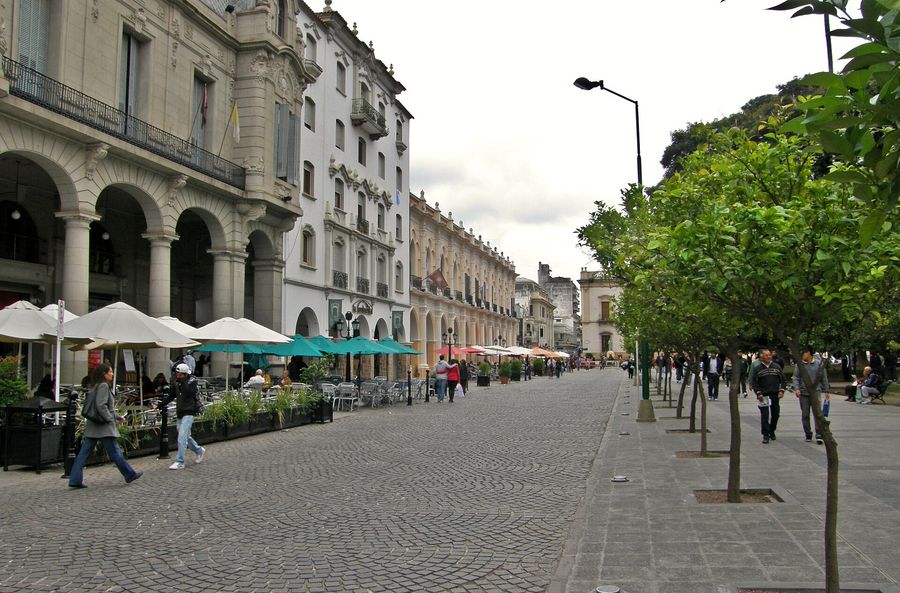
Plan four to five days in Salta, visiting during the April-to-November dry season when mountain roads stay open. Acclimatise to the 1,187-metre city before climbing to the Quebrada de Humahuaca or the 4,220-metre Tren a las Nubes, and hire driver-guides for the long canyon excursions rather than self-driving.
Most first-time visitors to Argentina build their trip around Buenos Aires, Patagonia, and the wine country, then discover almost by accident that the country's most surprising region sits in the far northwest. Salta — Salta la Linda, "Salta the Beautiful" — is the best-preserved colonial city in the country, tucked into the Lerma Valley at 1,187 metres where the pampas give way to the Andes. It rewards a different kind of planning than the rest of Argentina: the city itself is small and walkable, but the experiences travellers come for are scattered across hundreds of kilometres of canyon and altiplano. Getting a Salta trip right is mostly about sequencing those distances and respecting the altitude, then choosing which excursions are worth a guide and which you can do on your own.
How many days do you need in Salta?
Plan four to five days. Spend one or two easing into the altitude with the colonial centre, Plaza 9 de Julio, and Cerro San Bernardo, then give full days to the Quebrada de Humahuaca canyon, Cafayate wine country, and — if it is running — the Tren a las Nubes. A weekend leaves you stuck in a vehicle.
The single most common mistake is treating Salta as a one- or two-day stopover. The city earns a day or two, but the landscapes that justify the journey are full-day commitments, each in a different direction.
A realistic plan looks like four to five days. Spend the first easing into the altitude with the colonial centre around the Plaza 9 de Julio, the cathedral, and a cable-car ride up Cerro San Bernardo for the valley panorama. Reserve a full day for the Quebrada de Humahuaca, the striped UNESCO canyon to the north, and another for Cafayate and the Calchaquí wine valleys to the south. If the railway is running, the Tren a las Nubes deserves a day entirely to itself. Try to squeeze all of this into a long weekend and you will spend more time in a vehicle than out of it.
When is the best time to visit Salta?
April through November is the dry season, when clear skies and open mountain roads make canyon excursions safe; the cooler May-to-August months give the painted rock its sharpest colour. December to March brings afternoon storms that flood roads and close high passes, so add buffer days if you travel then.
Salta's calendar splits cleanly into a dry season and a wet one, and the difference matters far more here than in lowland Argentina because so much depends on mountain roads staying open.
April through November is the dry season — clear skies, cool nights, and the reliable road conditions that make canyon excursions safe. The cooler months from May to August are the most dependable of all; days are crisp and bright, and the thin high-altitude air gives the painted rock its sharpest colour. December through March brings the summer rains, when afternoon storms can flood canyon roads and close the high passes toward the Puna. Travelling in those months is not impossible, but build extra buffer days into the plan in case an excursion is postponed.
Whichever season you choose, the temperature swing between day and night is dramatic at this elevation. A sunny afternoon in the plaza can drop close to freezing after dark in winter, so pack layers even when the forecast looks mild.
Which Salta tours are worth booking a guide for?
The city centre needs only a map and a half-day walking tour, ideal while you acclimatise. Beyond it, a guide becomes near-essential: the long Quebrada de Humahuaca drive, the packaged Tren a las Nubes railway, and the Cafayate wine valleys all reward a driver-guide who handles the mountain roads and the indigenous history.
Salta is genuinely walkable in its centre, so the city itself needs little more than a good map and a couple of unhurried mornings. The excursions beyond it are where a guide shifts from a nice-to-have to something close to essential.
A half-day city walking tour is the gentle introduction — the cathedral, the whitewashed cabildo, and the wrought-iron balconied townhouses around the plaza all carry layers of indigenous and colonial history that are easy to walk straight past without context. It is also the ideal low-effort first day while your body adjusts to the altitude.
The Quebrada de Humahuaca is the excursion most people remember. The canyon runs some 290 kilometres north of the city through folded rock in reds, ochres, and greens, past Purmamarca's Cerro de los Siete Colores and the pre-Inca pucará fortress at Tilcara. The roads are long and winding, the high points sit near 2,900 metres, and the indigenous history is impossible to read from a guidebook — this is the outing where a knowledgeable driver-guide earns every peso.
The Tren a las Nubes — the Train to the Clouds — is the region's signature feat of engineering, climbing to 4,220 metres to cross the La Polvorilla viaduct, one of the highest railway bridges on Earth. It runs on a fixed seasonal schedule and combines bus and rail segments, so it is almost always booked as a packaged outing rather than improvised. Confirm operating dates before you commit other plans around it.
Cafayate and the Calchaquí Valleys, 190 kilometres south, are the wine alternative — high-altitude vineyards producing Argentina's distinctive Torrontés white, reached through the surreal rock formations of the Quebrada de las Flechas. A driver-guide here means you can taste without worrying about the long return drive.
How much does a Salta trip cost?
Expect a city walking tour at AR$15,000-25,000 ($15-25), a Humahuaca day trip at AR$50,000-90,000 ($50-90), and the Tren a las Nubes at AR$80,000-150,000 ($80-150). Carry pesos in cash, since smaller rural operators rarely take cards, and book early around the mid-September Fiesta del Milagro.
Argentina's currency swings make precise budgeting futile, so think in ranges, carry more cash than you expect to need, and assume that smaller operators and rural stops will want pesos rather than cards. As a rough guide:
| Tour Type | Approximate Cost | Notes |
|---|---|---|
| City walking tour | AR$15,000-25,000 ($15-25) | Per person, half-day |
| Humahuaca day trip | AR$50,000-90,000 ($50-90) | With transport |
| Tren a las Nubes | AR$80,000-150,000 ($80-150) | Ticket plus guide |
| Multi-day northwest circuit | AR$120,000-250,000 ($120-250) | Per day |
Beyond the tours, Salta is affordable by international standards — empanadas salteñas, hearty locro stew, and a peña folklore night with live guitar and dancing cost very little and are among the real pleasures of the place. Accommodation is the line item worth booking early, especially around the Fiesta del Milagro in mid-September, when pilgrims fill the city. For tips, the usual Argentine convention of around 10–15 percent for a good guide applies.
How do you get around Salta and its excursions?
Most visitors fly into Salta's Güemes airport, a two-hour hop from Buenos Aires. The compact colonial centre needs no transport beyond your feet and cheap remises, but resist self-driving the winding highways to Humahuaca and Cafayate — an experienced driver-guide is safer. Above all, respect the altitude, which climbs from 1,187 to 4,220 metres.
Most visitors arrive by air at Salta's Martín Miguel de Güemes International Airport (SLA), roughly a two-hour flight from Buenos Aires. From there, the practical decisions are about distance and altitude rather than navigation.
Inside the city, you need no transport at all — the colonial centre around the Plaza 9 de Julio is compact and easily walked, with local buses and inexpensive remises (private cars) covering anywhere further out. For the excursions, resist the temptation to self-drive the long routes. The roads to Humahuaca and Cafayate are winding mountain highways where conditions change quickly, and a multi-day circuit with an experienced driver-guide is both safer and more rewarding than wrestling with the navigation yourself.
The defining logistical fact of any Salta trip is altitude. The city is comfortable at 1,187 metres, but excursions climb fast — Humahuaca to nearly 2,900 metres, the railway to 4,220 metres. Spend your first day in the city before heading high, move slowly once you are up there, and follow the local habit of chewing coca leaves or sipping coca tea to ease the mild headaches that catch many travellers off guard. The northwest is also home to living Quechua, Diaguita, and Kolla communities, and a respectful guide makes the difference between glancing at a market and genuinely engaging with the people and traditions behind it.
Get the timing, the budget, and the altitude right, and Salta delivers what the rest of Argentina rarely does — colonial grandeur, painted canyons, and Andean skies, all within reach of a single small and welcoming city. For a wider itinerary, it pairs naturally with the Argentina country guide and the rest of the northwest beyond the city's own attractions.
Frequently Asked Questions
When is the best time to visit Salta?
April through November is the dry season, with clear skies, cool nights, and reliably open mountain roads — the safest window for canyon excursions. December through March brings afternoon storms that can flood roads and close passes, so leave extra buffer days if you travel then.
How many days do you need in Salta?
Plan four to five days. One or two for the city and the Cerro San Bernardo viewpoint, a full day for the Quebrada de Humahuaca, a day for Cafayate wine country, and ideally a separate day for the Tren a las Nubes, which is a long outing on its own.
How much does a guided tour in Salta cost?
A city walking tour runs roughly AR$15,000-25,000 ($15-25) per person, a Humahuaca day trip AR$50,000-90,000 ($50-90) with transport, and the Tren a las Nubes AR$80,000-150,000 ($80-150) for the ticket plus guide. A multi-day northwest circuit is about AR$120,000-250,000 ($120-250) per day. Carry pesos in cash.
Do you need to worry about altitude in Salta?
Salta city sits at a comfortable 1,187 metres, but excursions climb fast — Humahuaca reaches about 2,900 metres and the Tren a las Nubes peaks at 4,220 metres. Acclimatise for a day in the city first, move slowly at altitude, and drink coca tea to ease mild symptoms.