

Buckingham Palace timeline
-
Buckingham House is built for a duke
The townhouse at the heart of today's palace is built for John Sheffield, 1st Duke of Buckingham, on the site of an earlier mulberry garden planted by James I to rear silkworms.
-
George III buys it as the Queen's House
George III acquires the house for his wife, Queen Charlotte, as a comfortable family home close to St James's Palace; fourteen of their fifteen children are born there and it becomes known as the Queen's House.
-
George IV hires John Nash to build a palace
On becoming king, George IV commissions the architect John Nash to transform the house into a lavish palace, adding the State Rooms, gilded ceilings and the 47-metre Picture Gallery that visitors still walk through today.
-
Victoria makes it the official royal residence
Queen Victoria becomes the first monarch to live at Buckingham Palace as the sovereign's official London home, a role it has kept through every reign since.
-
The east front and its balcony are added
Edward Blore encloses Nash's open courtyard with a new east range facing The Mall, creating the central balcony from which the Royal Family would come to greet the crowds.
-
The first royal balcony appearance
Queen Victoria steps onto the new balcony to watch the opening of the Great Exhibition, beginning the tradition of balcony appearances that now follows every Trooping the Colour and major state occasion.
-
Aston Webb refaces the familiar front
The weathered east front is re-clad in Portland stone to Aston Webb's design in just thirteen weeks, giving the palace the crisp facade seen today, two years after the Victoria Memorial was unveiled before it.
-
The State Rooms open to the public
To help fund the restoration of fire-damaged Windsor Castle, the State Rooms open to paying visitors for the first time during the summer, establishing the annual Summer Opening.
- Today
A working palace and seasonal museum
Buckingham Palace remains the monarch's administrative headquarters, hosting investitures, state banquets and garden parties, while opening its State Rooms each summer and its forecourt ceremony year-round.
Historical Significance
Each State Room is a stage for a different royal function. The Throne Room, with its pair of canopied thrones, is where the King receives official guests and where royal wedding portraits are taken. The Ballroom, added for Queen Victoria in 1854 and the largest room in the palace at 36.6 metres long, hosts investitures where the monarch confers knighthoods and medals.
The State Dining Room seats banquets for scores of guests beneath portraits of the Hanoverian kings, while the 47-metre Picture Gallery displays masterpieces by Rembrandt, Rubens, Van Dyck, Canaletto and Vermeer drawn from the Royal Collection.
The palace is also a barometer of the monarchy's public life. The central balcony on the east front, created when Edward Blore enclosed the courtyard in 1847, has framed the nation's defining moments since Queen Victoria first appeared on it in 1851: VE Day in 1945, every Trooping the Colour, and coronation and jubilee crowds that fill the whole length of The Mall.
Whether the sovereign is at home is told at a glance by the flag above the roof, the Royal Standard when the King is in residence, the Union Flag when he is away.
Architecture
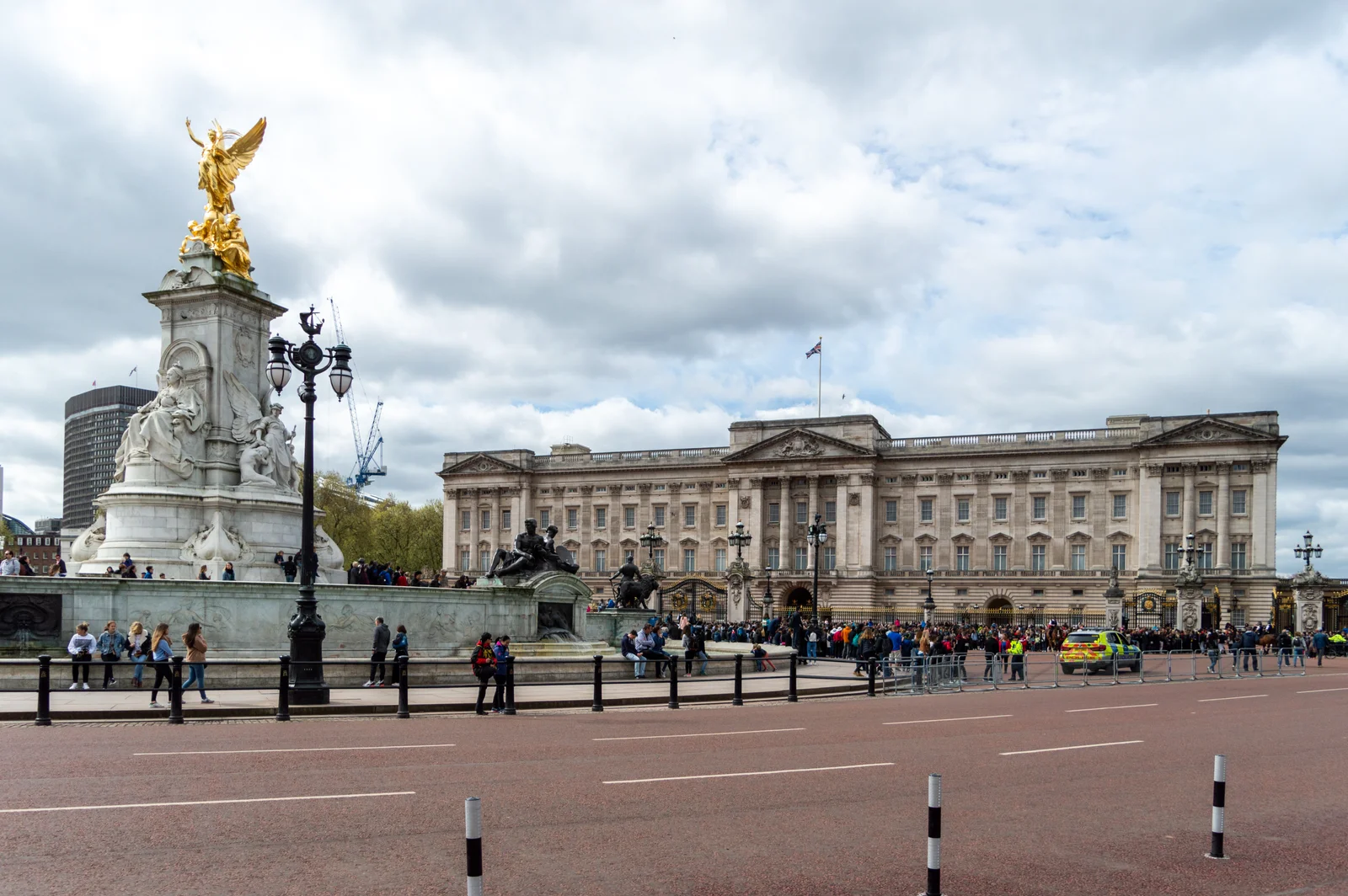
The palace's neoclassical east front, the face every visitor photographs, is deceptively modern. John Nash's grand remodelling for George IV in the 1820s created the State Rooms and the garden-facing west front, but his courtyard was left open until Edward Blore enclosed it with a new east range in 1847. That range weathered so badly that it was re-faced in hard-wearing Portland stone to Aston Webb's restrained design in 1913, in a single thirteen-week push, giving the balcony front its present crisp lines.
Behind that facade, Nash's interiors are the real showpiece. The State Rooms feature gilded columns, scagliola marble and coffered ceilings, and the White Drawing Room conceals a mirrored jib door through which the Royal Family makes its entrance. The Grand Staircase sweeps up beneath a gilt-bronze balustrade of acanthus scrollwork chosen by George IV, lit by an etched-glass dome, while the Picture Gallery runs 47 metres under a reworked glazed roof that bathes the Royal Collection paintings in daylight.
Buckingham Palace in Pictures
When to Visit
The State Rooms open only during the Summer Opening, roughly mid-July to late September (about 10 weeks), with timed entry from 9:30 AM and last admission in the late afternoon. The Changing of the Guard takes place at 11:00 AM on Monday, Wednesday, Friday and Sunday, rising to daily in peak summer, and is cancelled in heavy rain. Aim to arrive 30-45 minutes early for a railing-side spot. Book State Rooms tickets 2-3 months ahead, as the short season sells out quickly.
Admission and Costs
State Rooms: around £35 ($44) for adults in summer, with concession and under-18 reductions and free entry for under-5s. Royal Day Out (State Rooms, Queen's Gallery and Royal Mews combined): about £59 ($74). Changing of the Guard: free from the forecourt railings. Shared Blue Badge guided tour: roughly £50-70 ($63-88) per person; private half-day guide: £300-500 ($380-630).
The Case for a Guide
Most visitors photograph Buckingham Palace through the railings in a few minutes and move on, missing almost everything that makes it interesting. A guide turns the forecourt and the State Rooms into a readable story rather than a blur of gilt and marching.
- Positioning for the Changing of the Guard: a guide knows exactly where to stand, at the railings, by the Victoria Memorial, or along Spur Road, and when the New Guard actually arrives, so you watch the hand-over instead of the backs of the crowd.
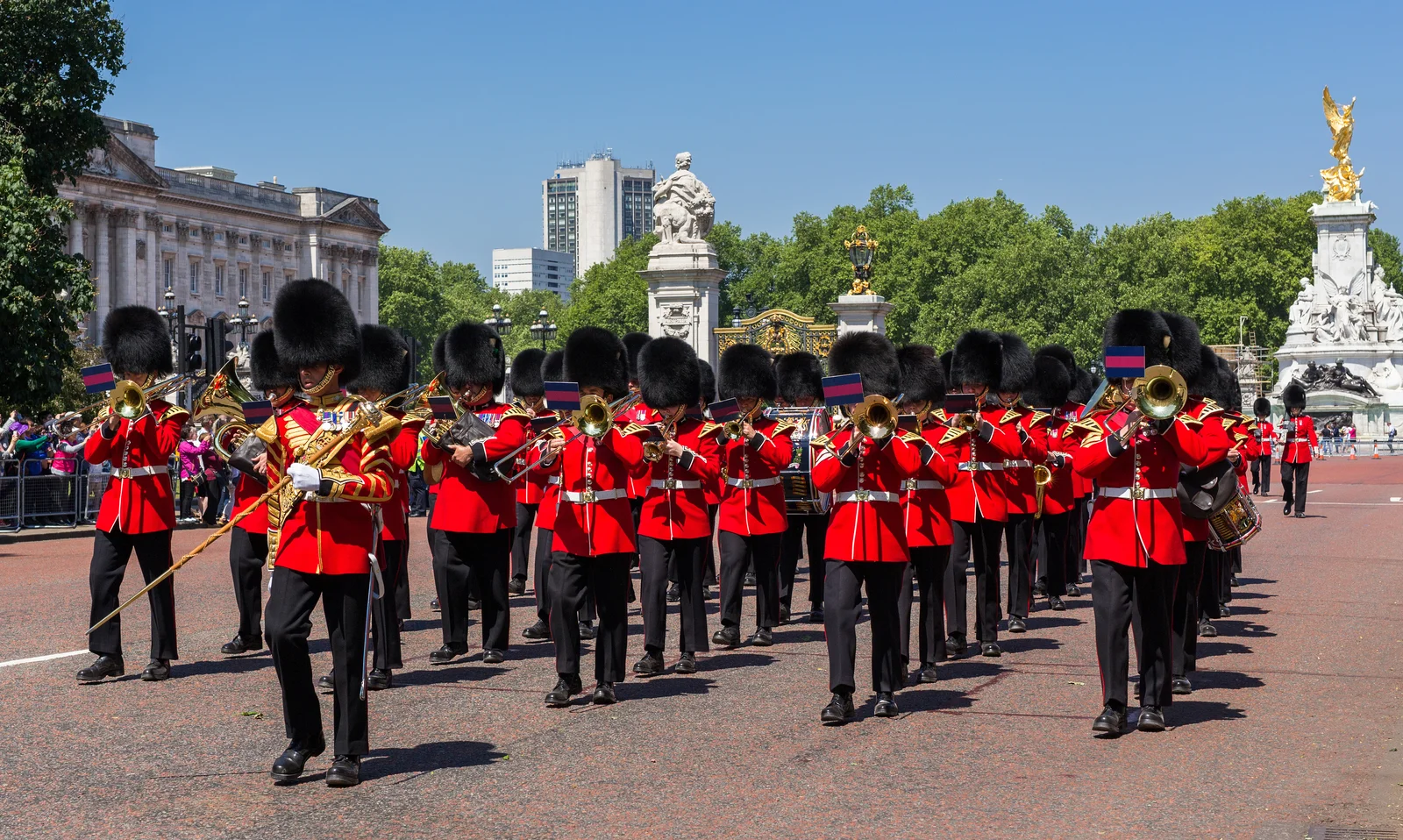
- Decoding the ceremony: the drill, the regimental music and the bearskin caps all carry meaning; a guide explains which regiment is on duty, why the tunes change daily, and what the Royal Standard flying above the roof tells you about whether the King is home.
- Reading the State Rooms: on a Summer Opening visit a guide points out what the self-guided route glosses over, the hidden jib door in the White Drawing Room, the specific Canaletto and Vermeer canvases worth seeking out, and which thrones appear in royal wedding portraits.
- Joining up the royal quarter: a Blue Badge guide links the palace to the Victoria Memorial, the Royal Mews and nearby London landmarks into one coherent walk rather than a set of disconnected photo stops.
Tips for Visitors
Summer only inside: the State Rooms are shut from autumn to early summer, so time an interior visit for July-September. Beat the ceremony crowds: arrive 30-45 minutes before 11:00 AM and position yourself at the railings or on the Victoria Memorial steps for a clear view over the heads in front.
No photography is permitted inside the State Rooms. Travel light, as airport-style security screening applies at the entrance. Combine tickets: the Royal Day Out adds the Queen's Gallery and the Royal Mews with its gilded Gold State Coach next door.
Frequently Asked Questions
What is the best time of year to visit Buckingham Palace?
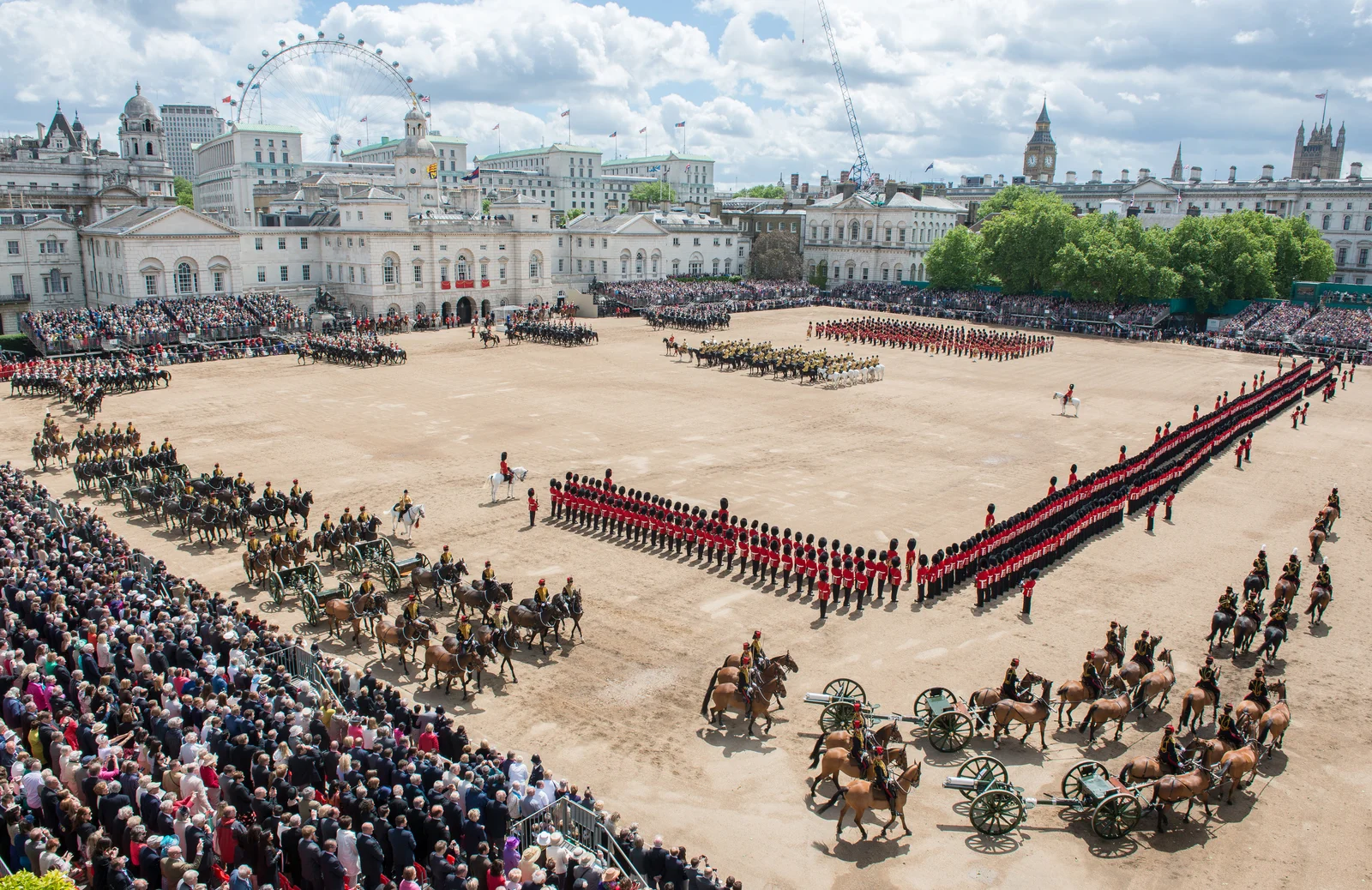
Late July through September is the only window when the State Rooms open to the public, so that is the essential season if you want to see inside. June brings the Changing of the Guard most frequently, plus Trooping the Colour for the King's official birthday on the second Saturday of the month. From October to June you are limited to the forecourt, the Victoria Memorial and whichever days the guard change runs, which is why summer scores highest on the month ratings above.
Can you go inside Buckingham Palace, and which rooms can you see?
Yes, but only during the ten-week Summer Opening, when the self-guided route takes in 19 of the palace's State Rooms: the Throne Room, the Ballroom, the State Dining Room, the Blue and White Drawing Rooms and the 47-metre Picture Gallery hung with works by Rembrandt, Rubens, Van Dyck, Canaletto and Vermeer. The private apartments, offices and staff quarters that make up most of the 775 rooms are never open. For the rest of the year the interior is closed and only the exterior and ceremony can be seen.
How much does it cost to visit Buckingham Palace?
A State Rooms summer ticket is around £35 ($44) for adults, with reductions for concessions and under-18s and free entry for under-5s; the combined Royal Day Out ticket adding the Queen's Gallery and the Royal Mews is about £59 ($74). Watching the Changing of the Guard from the forecourt railings is completely free. A shared Blue Badge guided tour of the royal area runs roughly £50-70 ($63-88) per person, while a private half-day guide is about £300-500 ($380-630).
What should visitors know before going to Buckingham Palace?
Book State Rooms tickets two to three months ahead, as the summer slots sell out. For the Changing of the Guard, arrive at least 30-45 minutes early and stand against the railings or by the Victoria Memorial for the clearest view, and check the schedule in advance because it is cancelled in wet weather. Photography is not allowed inside the State Rooms. Security screening applies, so travel light. If the Royal Standard flag is flying the King is in residence; the Union Flag flies when he is away.